How a Solo Birthday Omakase at Kai Sushi Became My Most Meaningful Celebration Yet
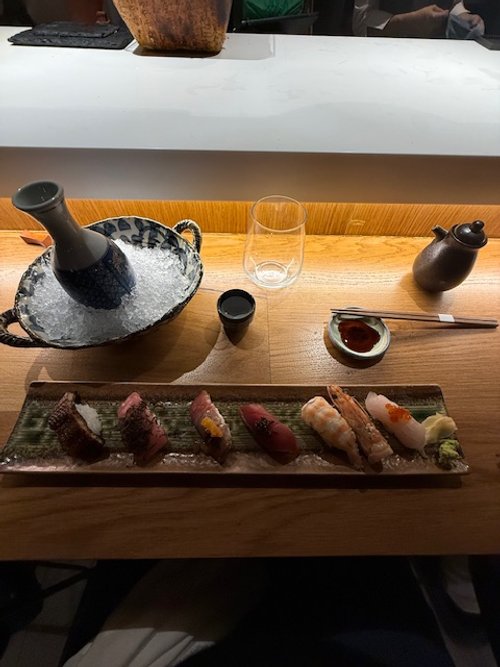
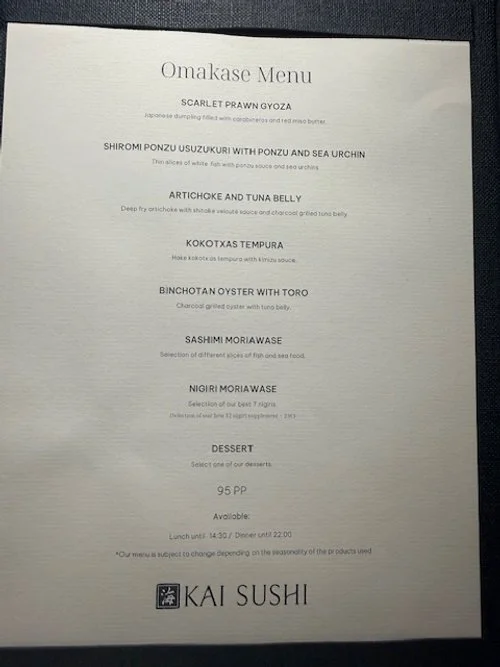
The best birthday gift I've ever given myself came served on a wooden counter, one deliberate piece at a time, in a small sushi bar tucked into the Centro neighborhood of San Sebastián. No fanfare. No crowd. Just me, a master chef, and the quiet celebration of choosing myself.
When my birthday arrived this year, I found myself at a crossroads that many of us face when living abroad, especially in our thirties: Do I wait for the "perfect" celebration with new friends who might be busy? Do I downplay the day because organizing something feels too complicated? Or do I honor myself exactly as I am, right now, in this moment of my life?
I chose the third option. And in doing so, I discovered that the most profound act of self-love isn't always the grandest gesture. Sometimes it's simply showing up for yourself with intention, presence, and the willingness to receive joy on your own terms.
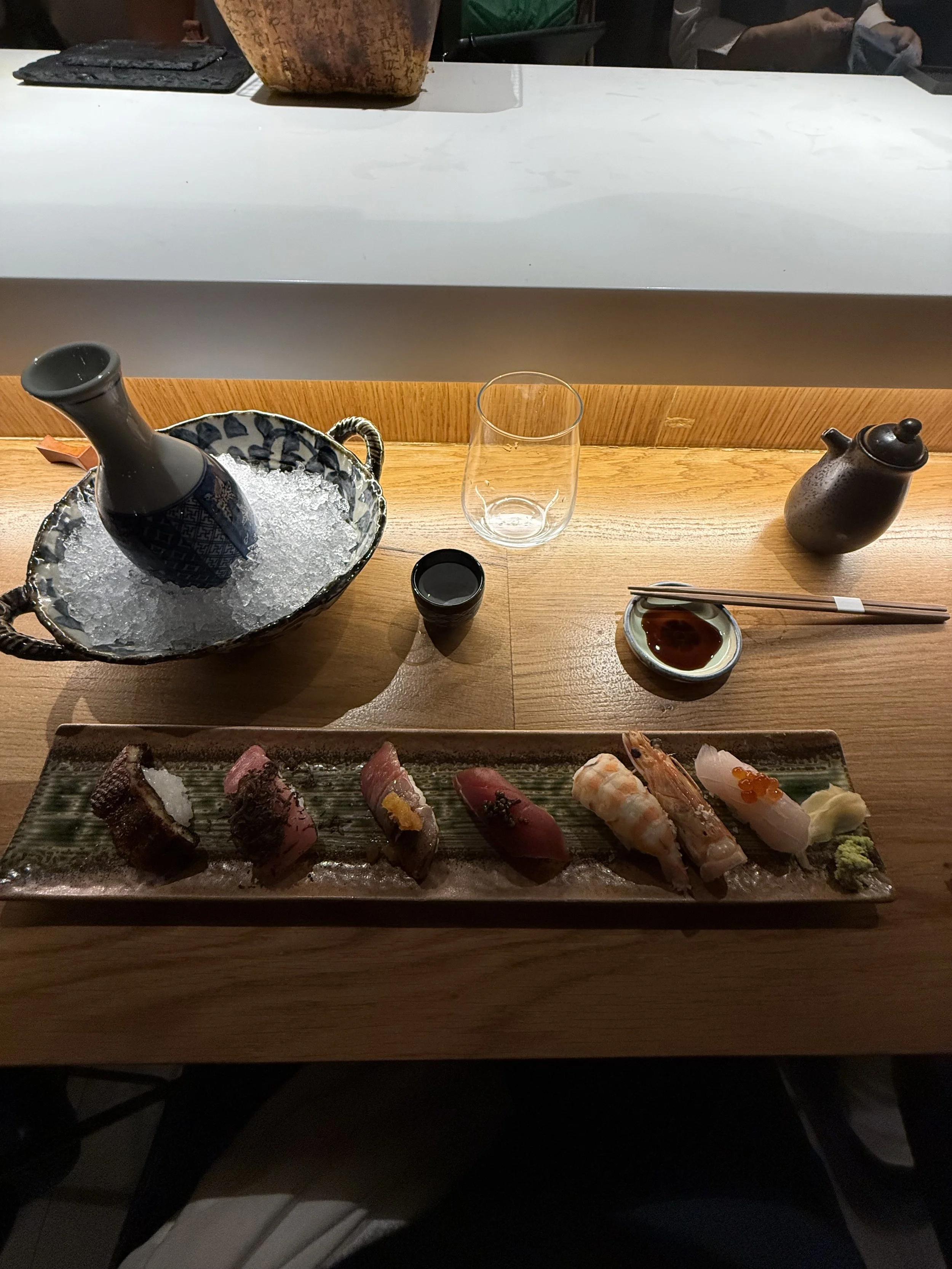
Omakase sushi nigiri at Kai Sushi San Sebastian counter seating
Living in San Sebastián as a gastronomy student has fundamentally transformed my relationship with food. This city doesn't just have food culture…it is food culture. Locals here celebrate eating like a religion, and every meal carries the weight of tradition, identity, and passion woven through generations. The Basque approach to gastronomy isn't about sustenance; it's about honoring the sea, the land, and the hands that transform raw ingredients into edible poetry.
For months, I'd been hearing whispers about Kai Sushi from classmates and food lovers around the city. A small, intimate restaurant run by Chilean chef Sebastian Pincheira, Kai opened its permanent doors in March 2022 after starting as a pop-up in 2019. What makes it special isn't just the exceptional quality of the fish or the meticulous craft; it's the thoughtful fusion of Japanese technique with Basque ingredients and philosophy. In a city overflowing with Michelin-starred restaurants and legendary pintxos bars, Kai carved out its own identity by respecting two culinary traditions simultaneously.
When I learned they offered an omakase experience: the Japanese tradition of entrusting the chef to design your entire meal, I knew this was how I wanted to mark another year of life. Not with a predictable dinner I'd order from a menu, but with an experience that required trust, surrender, and openness to surprise. Exactly the qualities I've been cultivating in myself during this transformative chapter abroad.
Let me be honest: the idea of taking myself out to a nice restaurant for a solo birthday dinner felt simultaneously empowering and vulnerable. We live in a culture that often frames solo dining (especially at upscale establishments) as something to be pitied or avoided. There's an unspoken narrative that fine dining "should" be shared, that celebrating alone somehow diminishes the occasion.
But here's what I've learned through my studies of gastronomy and through my own journey of self-discovery in my thirties: food is one of the most intimate relationships we have. When we remove the social performance of dining, the need to converse, to split attention, to moderate our responses, we create space for a deeper, more embodied experience with what we're eating.
Solo dining isn't loneliness. It's presence. It's the opportunity to be fully immersed in the sensory experience of a meal without distraction. Research in mindfulness and eating psychology shows that when we eat slowly and attentively, we not only improve digestion and regulate appetite better, but we also increase our appreciation and satisfaction from meals. We taste more. We notice more. We feel more.
And on my birthday, a day that marks my personal journey around the sun, what could be more appropriate than that kind of radical presence?
I dressed intentionally for the occasion, choosing an outfit that made me feel confident and celebratory. This wasn't about impressing anyone else; it was about signaling to myself that this meal mattered, that I mattered. As I walked the fifteen minutes from the Old Town to Arrasate Kalea 5, where Kai Sushi sits quietly in the Centro district, I felt a flutter of anticipation mixed with nervousness.
What would it feel like to sit at that counter alone? Would the staff treat me differently? Would I feel exposed?
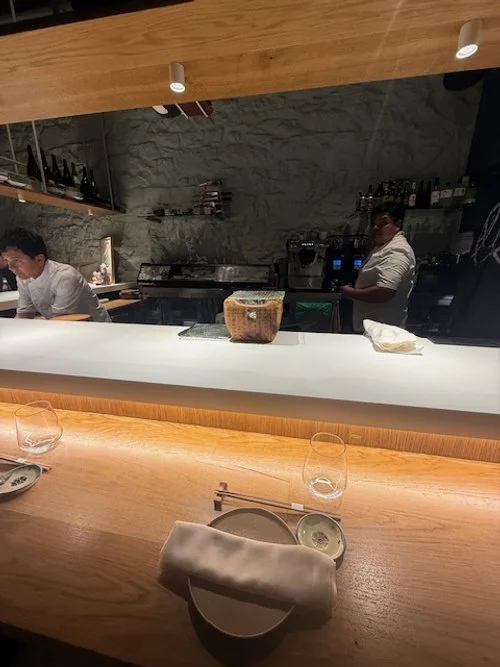
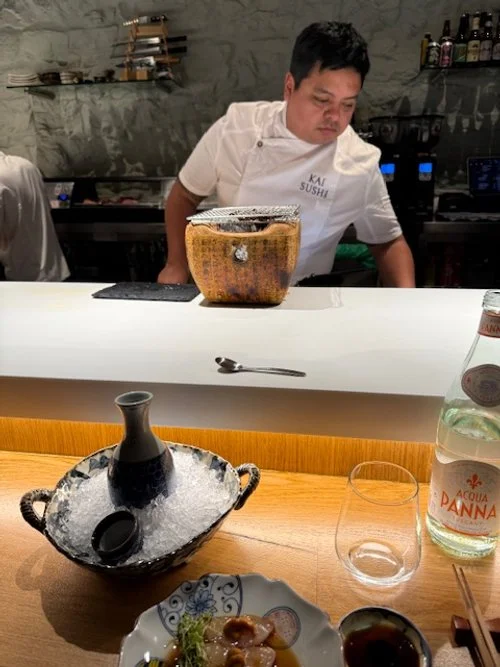
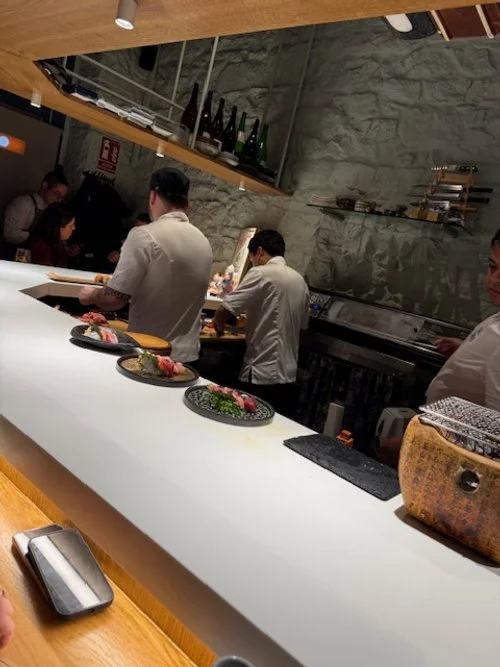
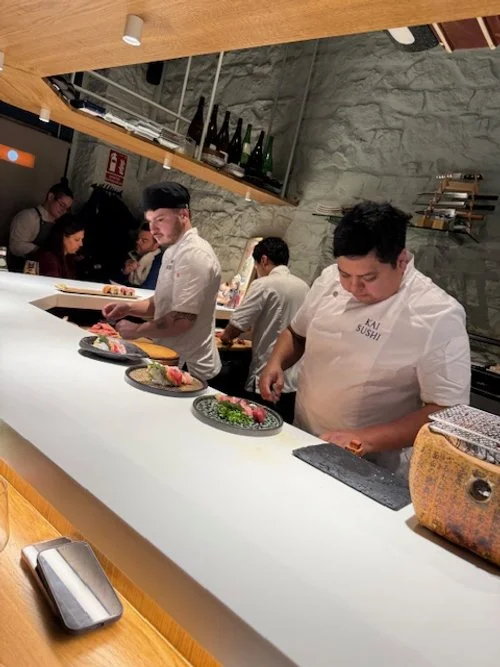
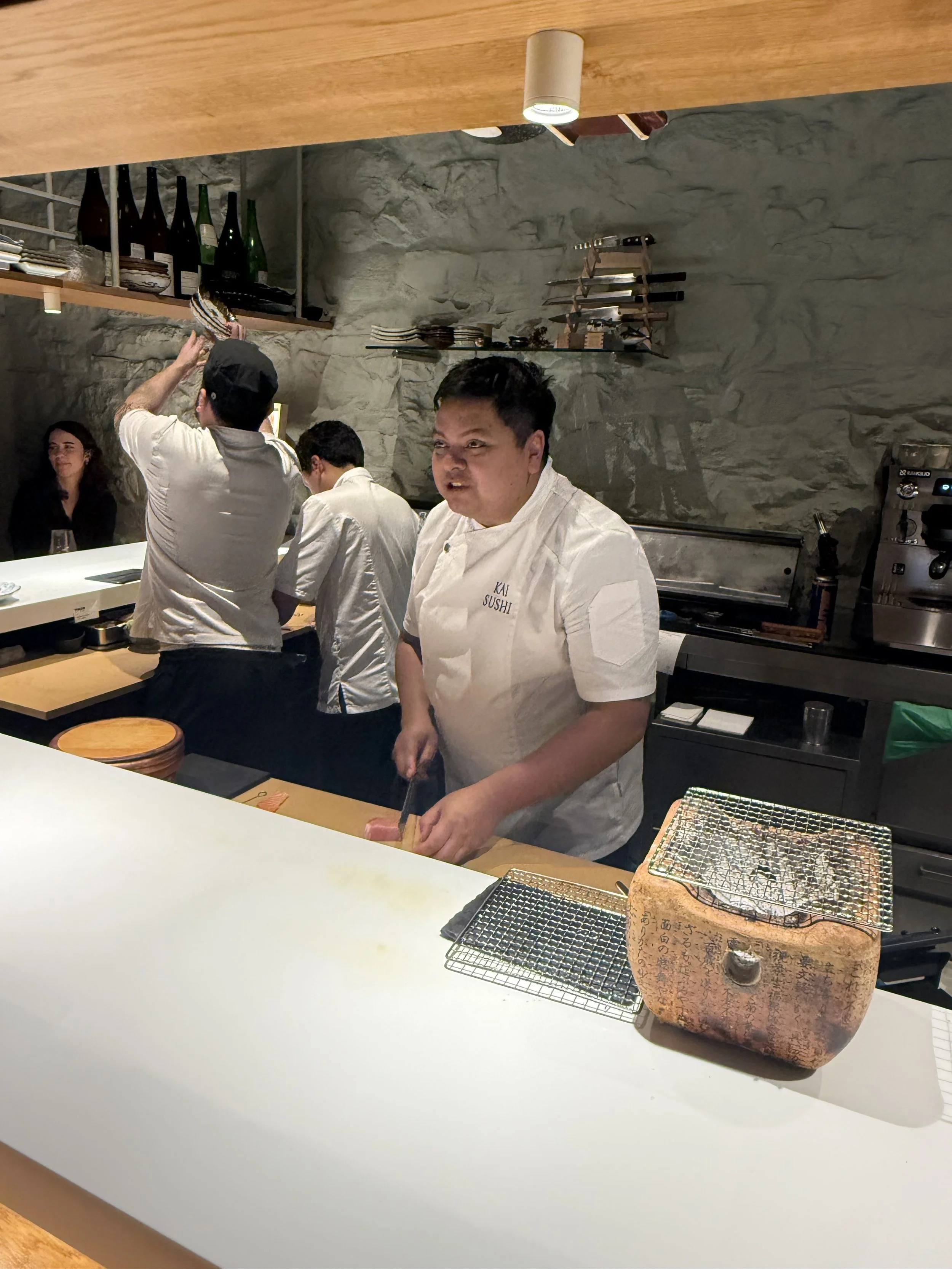
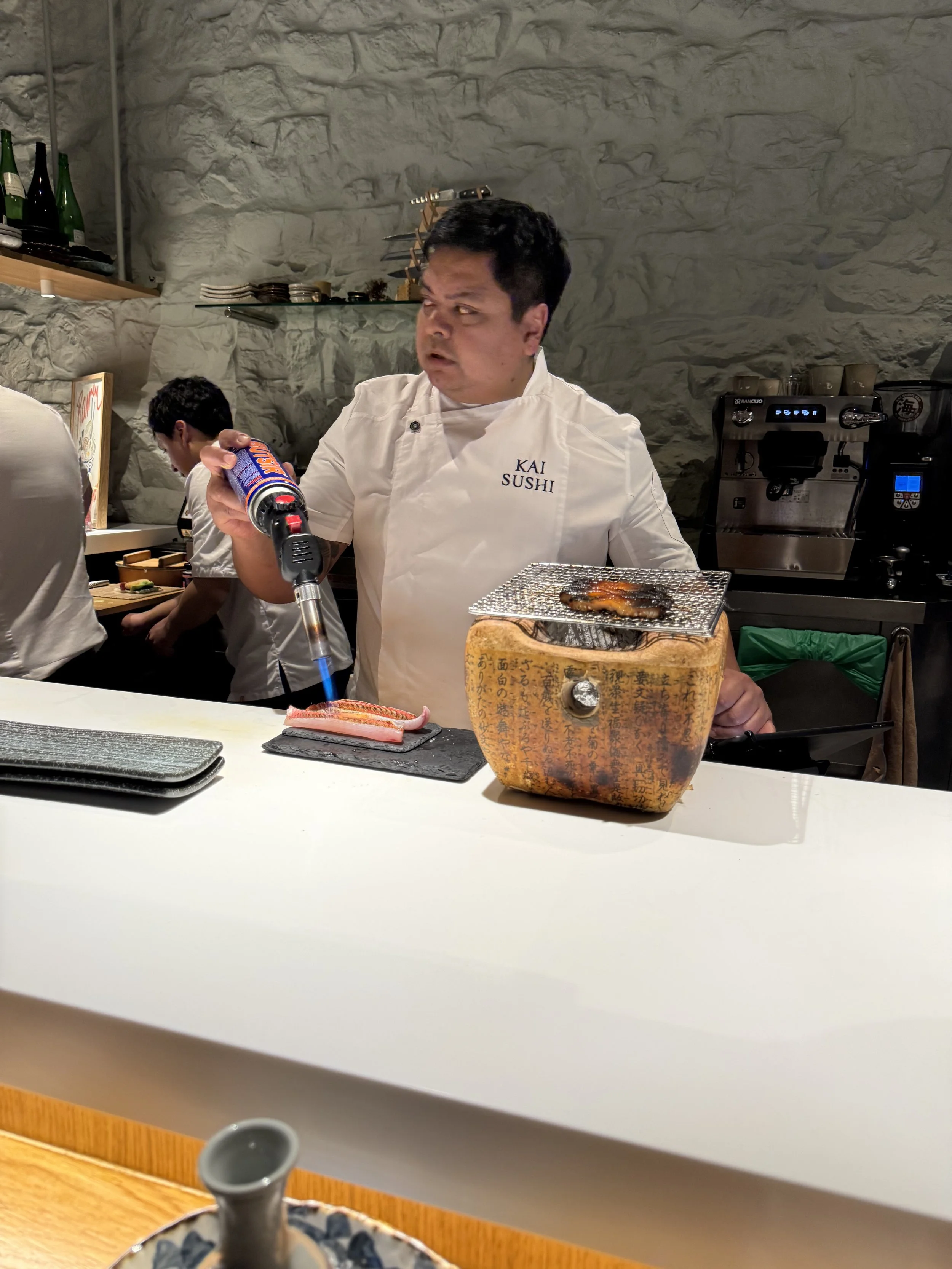
The moment I stepped through Kai's doors, those worries dissolved. The space is small, authentically Japanese in its intimate scale, with soft lighting, warm wood paneling, and an open sushi bar that immediately draws your eye. There's a handful of tables, but the real heart of the restaurant beats at the counter, where diners can watch the chefs work.
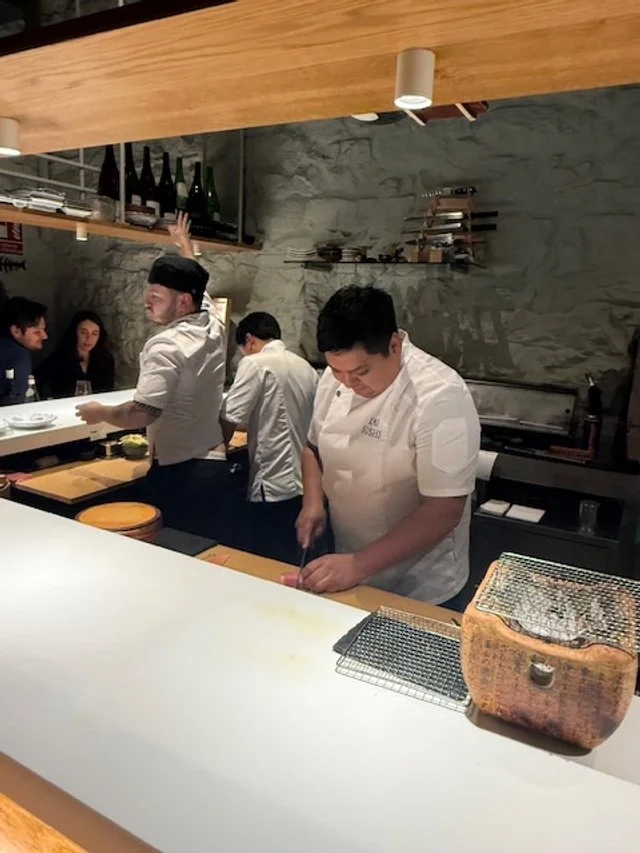
I took my seat at the counter, and immediately understood why this is the preferred way to experience omakase. Sitting here isn't passive observation….it's participation in a culinary performance, a front-row seat to craftsmanship that has been refined over years of training. The proximity to the chef creates an intimacy that transforms the meal from transaction to relationship.
The chef greeted me warmly, and when I mentioned it was my birthday, his face lit up with genuine pleasure. There was no pity in his eyes for my solo celebration, only respect and enthusiasm for the experience we were about to share. In that moment, I realized something important: the restaurant staff understand that choosing to dine alone at a place like this is an act of self-respect, not sadness.
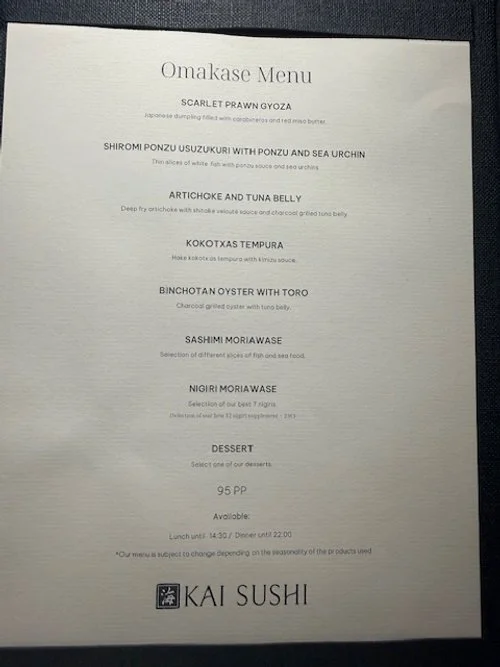
What Omakase Means: Surrender and Trust
The word "omakase" translates from Japanese as "I'll leave it up to you" or "I leave it in your hands". It's derived from the verb makaseru, meaning "to entrust". When you order omakase, you're not selecting dishes from a menu, you're ceding creative control entirely to the chef, trusting them to craft a personalized journey based on the freshest ingredients available that day.
This tradition became popular in Japan in the 1990s as a way for diners who were overwhelmed by the intricacies of sushi culture to experience fine dining without the pressure of making expert choices. By entrusting the meal to the chef, guests could enjoy expertly selected and prepared dishes while also learning through the chef's explanations and storytelling.
Omakase is more than a meal, it's a meditation on trust, both in the chef's skill and in one's own worthiness to receive care. For someone like me, who has spent much of her life trying to control outcomes and prove her competence, the act of simply saying "I trust you" felt quietly revolutionary.
The Michelin Guide has called omakase "few formal dining experiences are as revered or as intimidating," describing it as the "spiritual companion and counterpoint" to kaiseki, the elaborate multi-course Japanese meal. Food writer Jeffrey Steingarten wrote of omakase in Vogue: "You expect to be brought the most perfect seafood available at that time of year, fish that will be handled as carefully as a kidney awaiting transplantation and as respectfully as a still-living thing".
As my omakase experience began, I understood the reverence. This wasn't just dinner. It was ceremony.
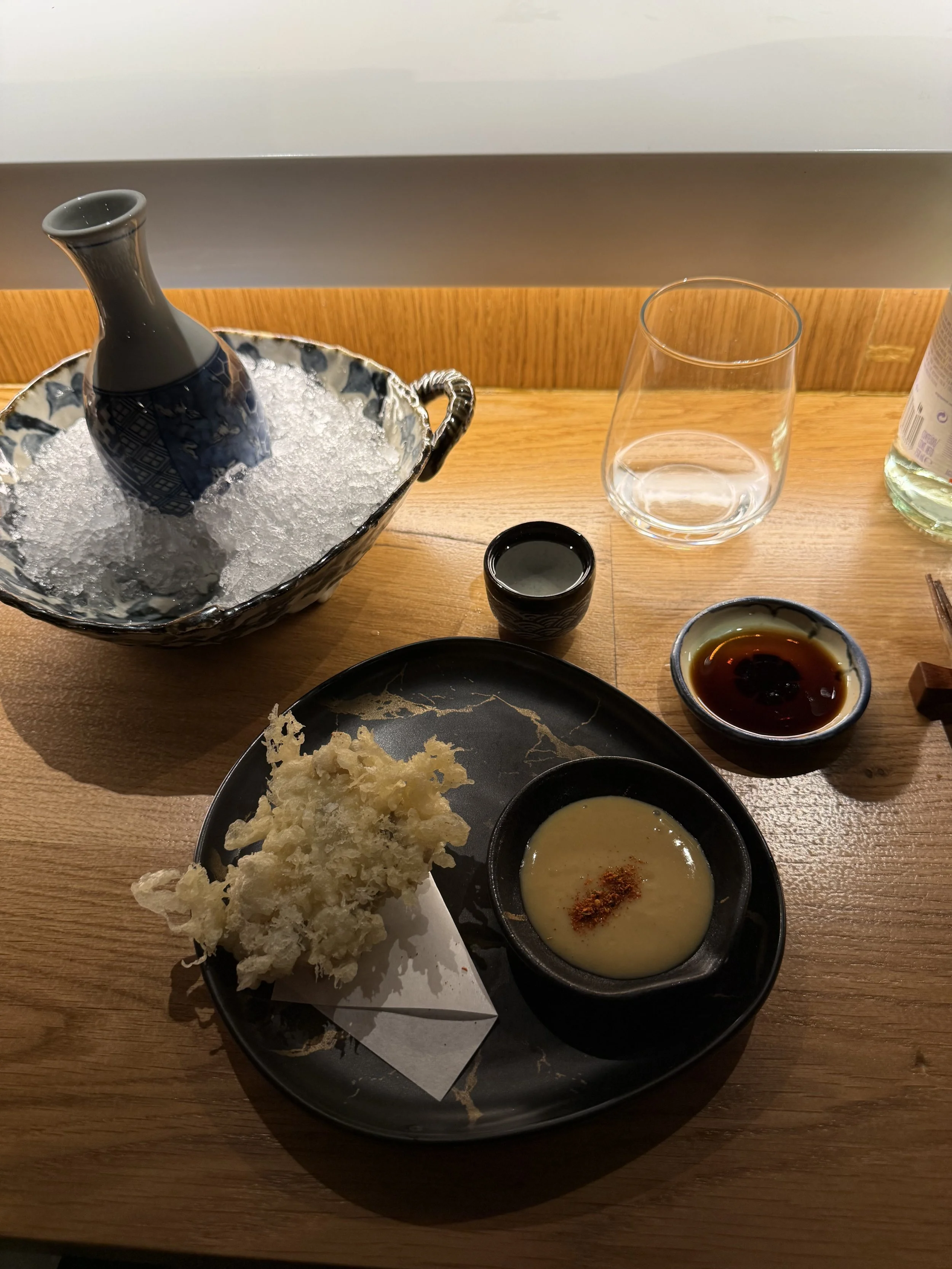
The meal unfolded in a carefully structured progression, each course designed to prepare my palate for the next. True to omakase philosophy, lighter flavors came first, followed by richer dishes, then a return to clean, delicate notes. This rhythm isn't accidental. Japanese chefs build menus to guide the palate, avoiding fatigue and keeping flavors clear.
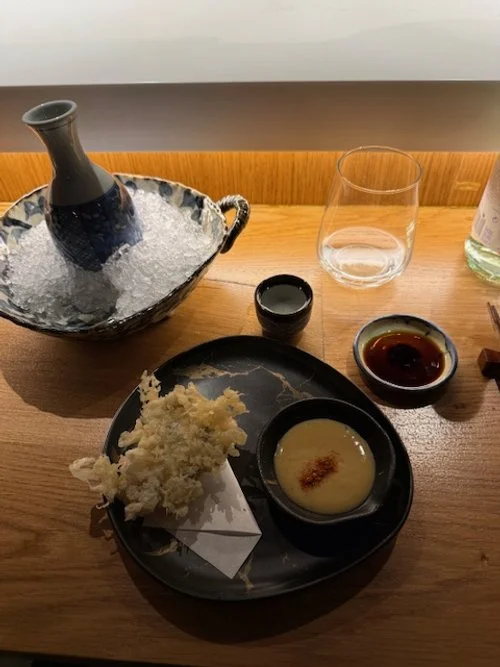
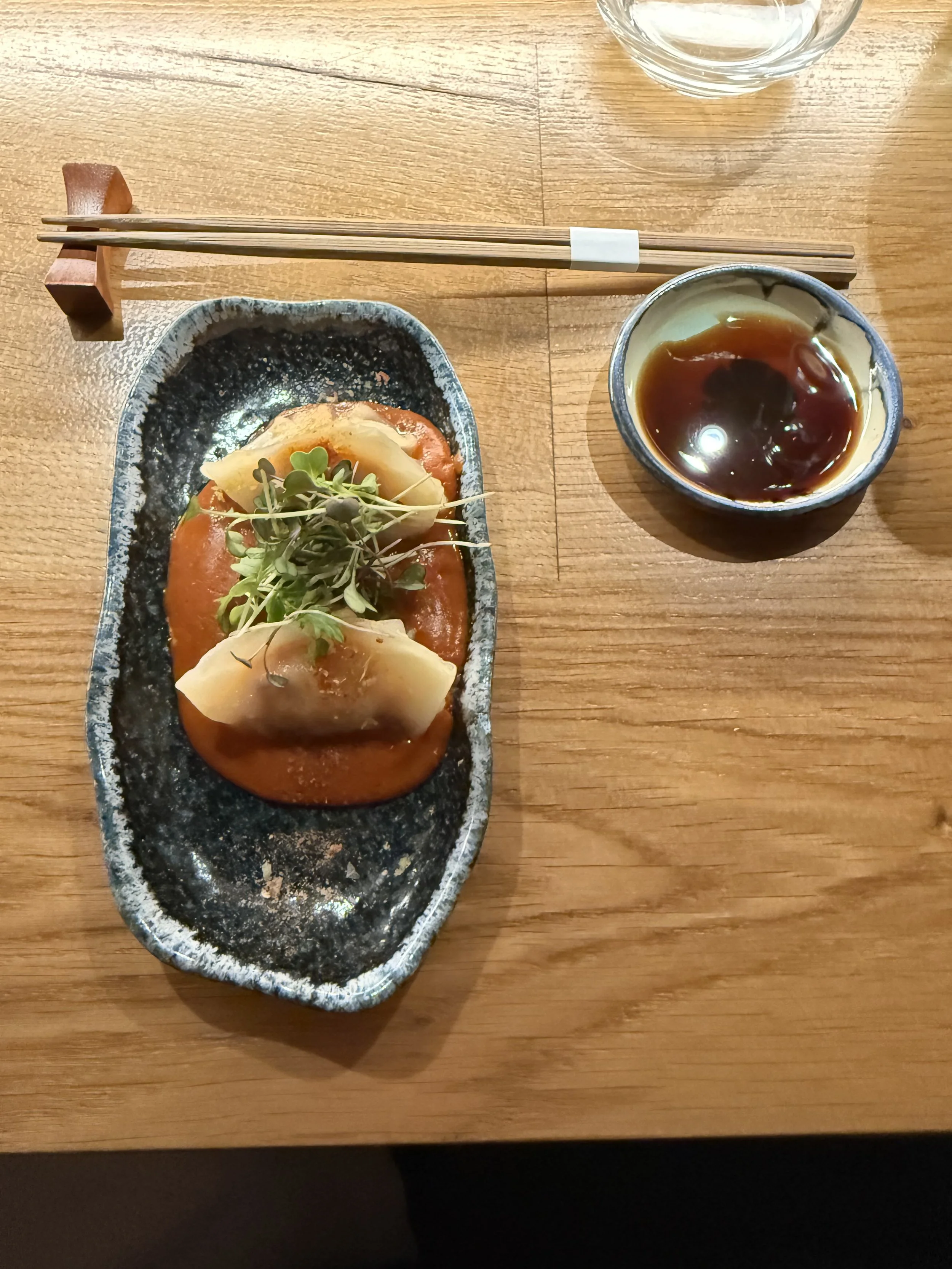
What made Kai's omakase particularly special was the seamless integration of Basque ingredients and techniques. Chef Pincheira has mastered the art of honoring both culinary traditions without dilution. One of the standout courses featured txangurro, Basque spider crab, prepared in a way that bridged continents.
Txangurro is a culinary jewel in Basque gastronomy, a seasonal delicacy that symbolizes the region's intimate relationship with the Cantabrian Sea. Traditionally prepared as txangurro a la donostiarra, baked in the shell with sautéed vegetables, brandy, and breadcrumbs…it's a dish reserved for celebrations and special occasions. To encounter it here, reimagined as a gyoza filling, was to witness culinary fusion at its most thoughtful.
The dumpling arrived delicate and precise, the crab's sweetness amplified by a hint of gochujang heat and the earthiness of shiitake mushrooms. In one bite, I tasted the Atlantic Ocean and Japanese precision. I tasted tradition respected and boundaries lovingly crossed. It was, quite simply, extraordinary.
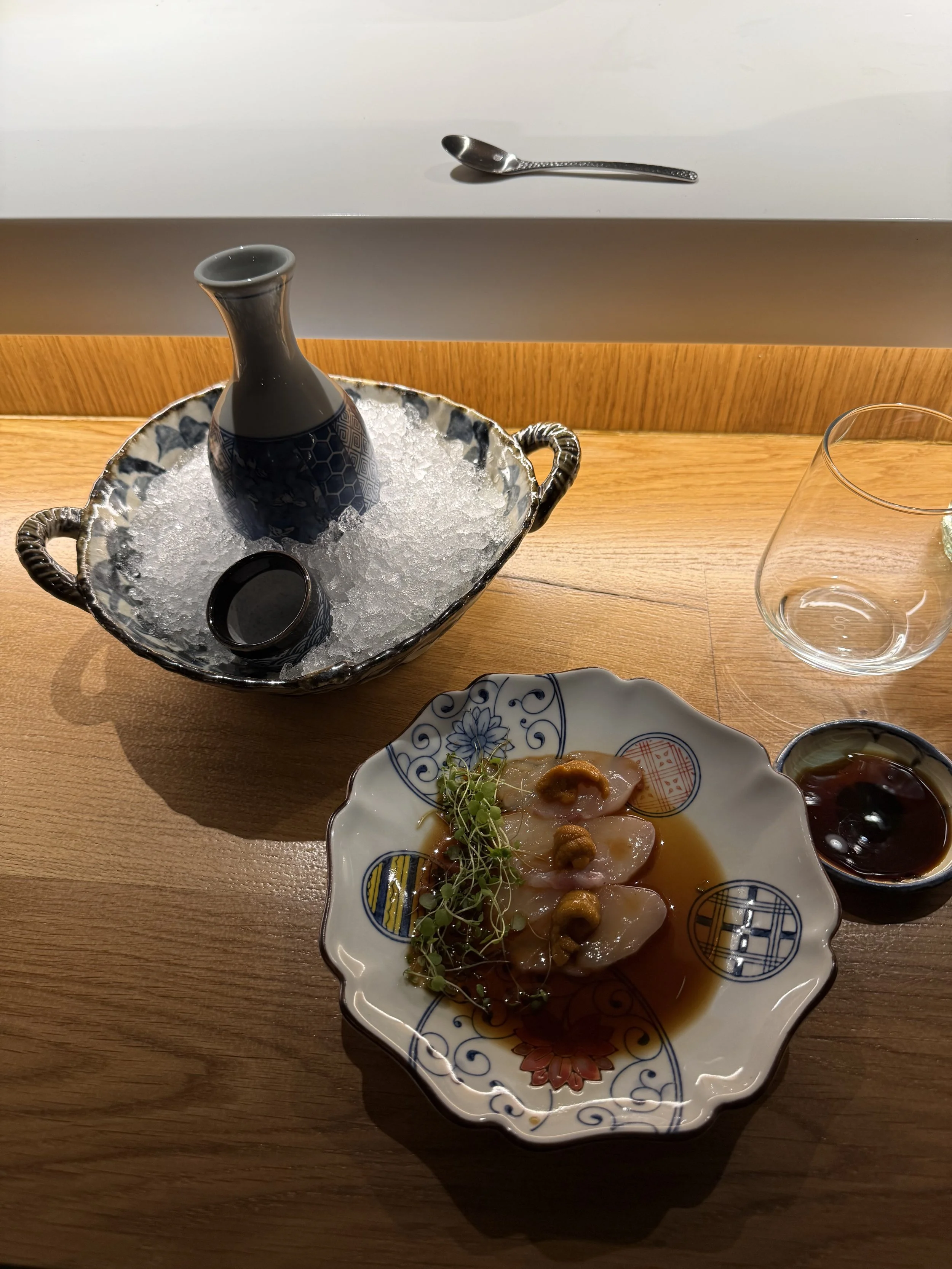
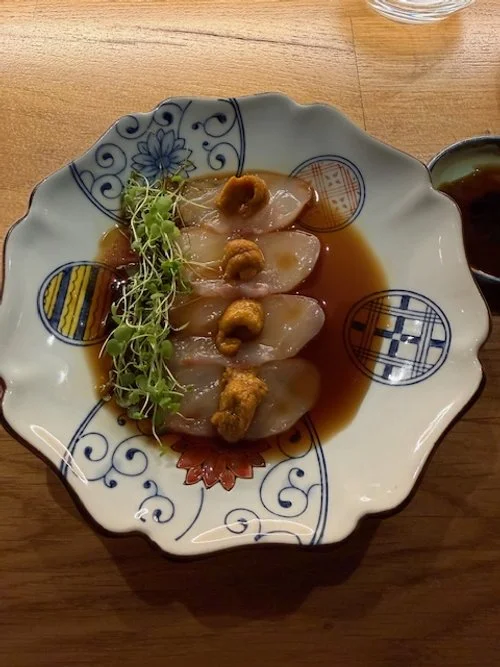
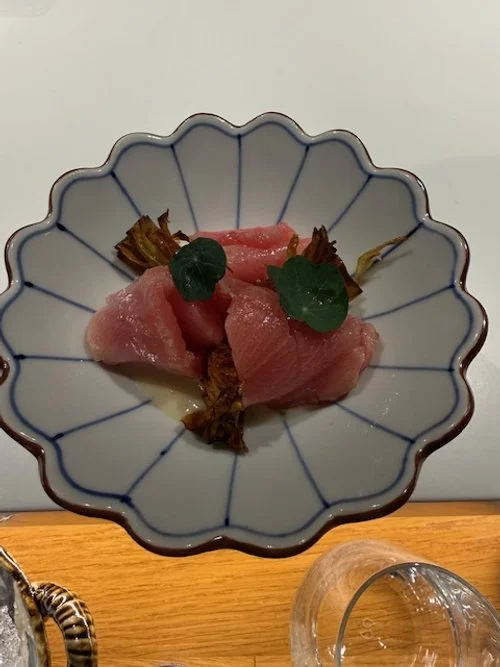
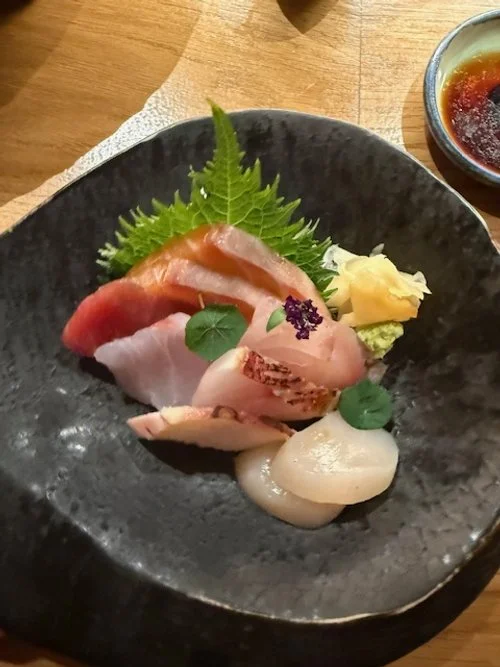
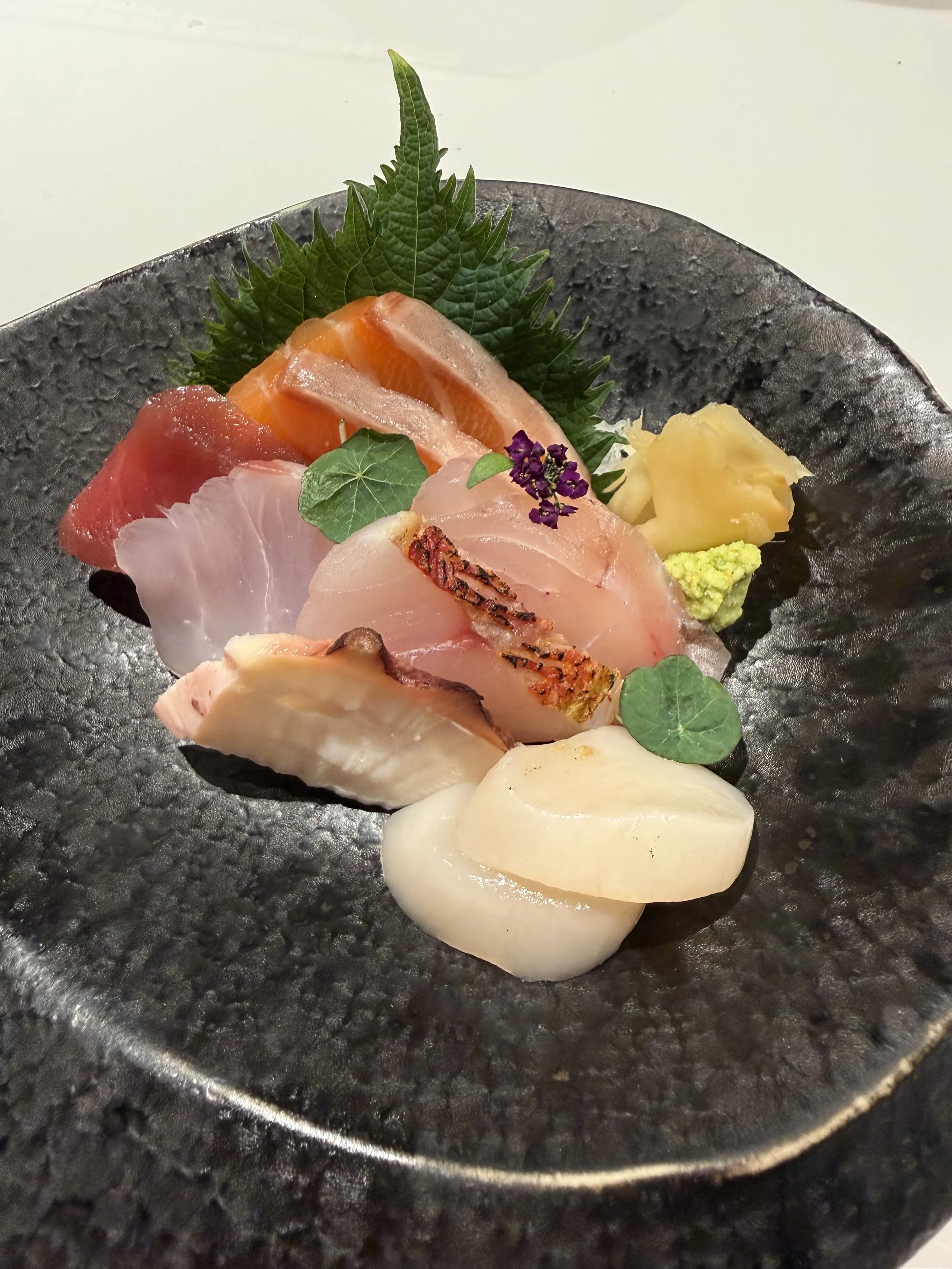
As each piece of nigiri was placed before me, the chef shared stories: where the fish came from, how it was prepared, why this particular topping or seasoning was chosen. I learned about the toro (tuna belly), its marbling and richness carefully balanced with a touch of citrus. I watched as salmon was delicately sliced and molded over perfectly seasoned rice, the fish's coral hue almost glowing in the soft light.
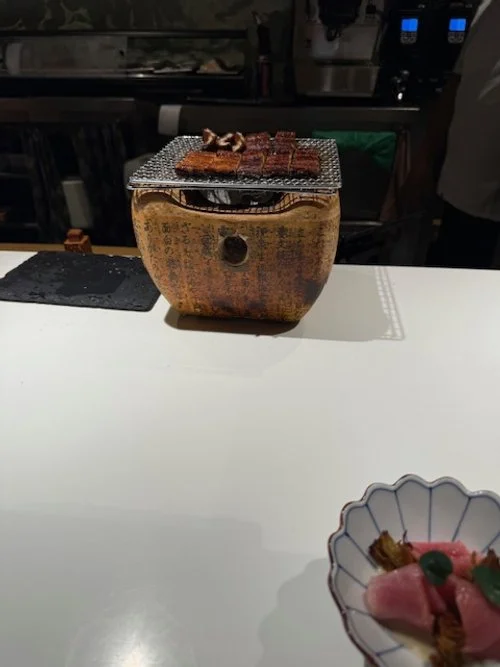
The beauty of sitting at the counter is that you witness the precision required for each piece. The way the chef slices the fish at a specific angle to maximize texture. The exact pressure applied to shape the rice, firm enough to hold together, loose enough to dissolve on the tongue. The deliberate brush of nikiri soy or the precise placement of a shiso leaf. Every movement is intentional, the result of years of training and muscle memory.
This level of craftsmanship demands attention. And giving it my full attention, without the distraction of conversation or the urge to check my phone, allowed me to appreciate the artistry in a way I never could have otherwise.
Somewhere around the fifth or sixth course, I noticed something shifting inside me. The constant mental chatter that usually accompanies my meals, the planning, the analyzing, the low-level anxiety, had quieted. I was simply here, in my body, tasting and experiencing.
This is the essence of mindful eating. When we slow down and bring full awareness to our meals, we activate our rest-and-digest nervous system. We taste more complex flavors. We notice subtle textures. We register satiety cues more accurately. But beyond the physiological benefits, mindful eating offers something even more valuable: it brings us into intimate contact with the present moment.
Fine dining environments, when approached with intention, create ideal conditions for this kind of mindfulness. The careful plating invites visual appreciation. The pacing of courses naturally slows consumption. The quality of ingredients rewards attention. At Kai, sitting at that counter, I wasn't just eating, I was participating in a meditation on flavor, texture, and gratitude.
I thought about my journey to this moment. The courage it took to move to Spain in my mid-thirties. The vulnerability of starting over in a new country, a new field of study. The loneliness I've navigated and the self-discovery I've embraced. The gradual process of learning to trust myself, to honor my needs, to celebrate my wins without waiting for external validation.
This meal was a metaphor for all of it. Course by course, I was receiving care, not from a partner or friend, but from my own choice to show up for myself. Each bite was a small act of self-love, a quiet affirmation: You are worthy of beauty. You are worthy of nourishment. You are worthy of celebration.
There's significant research supporting what I felt in that moment. Self-compassion, the practice of treating ourselves with the same kindness we'd offer a good friend, has been shown to increase happiness and well-being, lower anxiety, improve relationships, and enhance physical health. When we practice self-compassion, we activate what psychologists call the "mammalian caregiving system," which triggers the release of oxytocin, the hormone associated with love and bonding. This creates feelings of trust, calm, safety, and connectedness, not just with others, but with ourselves.
Self-celebration, specifically, reinforces motivation and fosters a healthier self-image. It's not about ego or self-indulgence, it's about acknowledging our journey and honoring our growth. Psychologists note that celebrating small wins rewires our brains to expect success and builds emotional resilience.
For those of us navigating our thirties, a decade often marked by profound self-discovery and transformation, these practices become even more crucial. The thirties are a time when many of us begin questioning old identities, stepping outside comfort zones, and redefining what success and fulfillment mean. It's a period of letting go and becoming, of shedding who we thought we should be to embrace who we actually are.
Choosing to celebrate my birthday with this solo omakase wasn't frivolous. It was an investment in my relationship with myself. It was a deliberate practice of self-compassion and a tangible celebration of how far I've come.
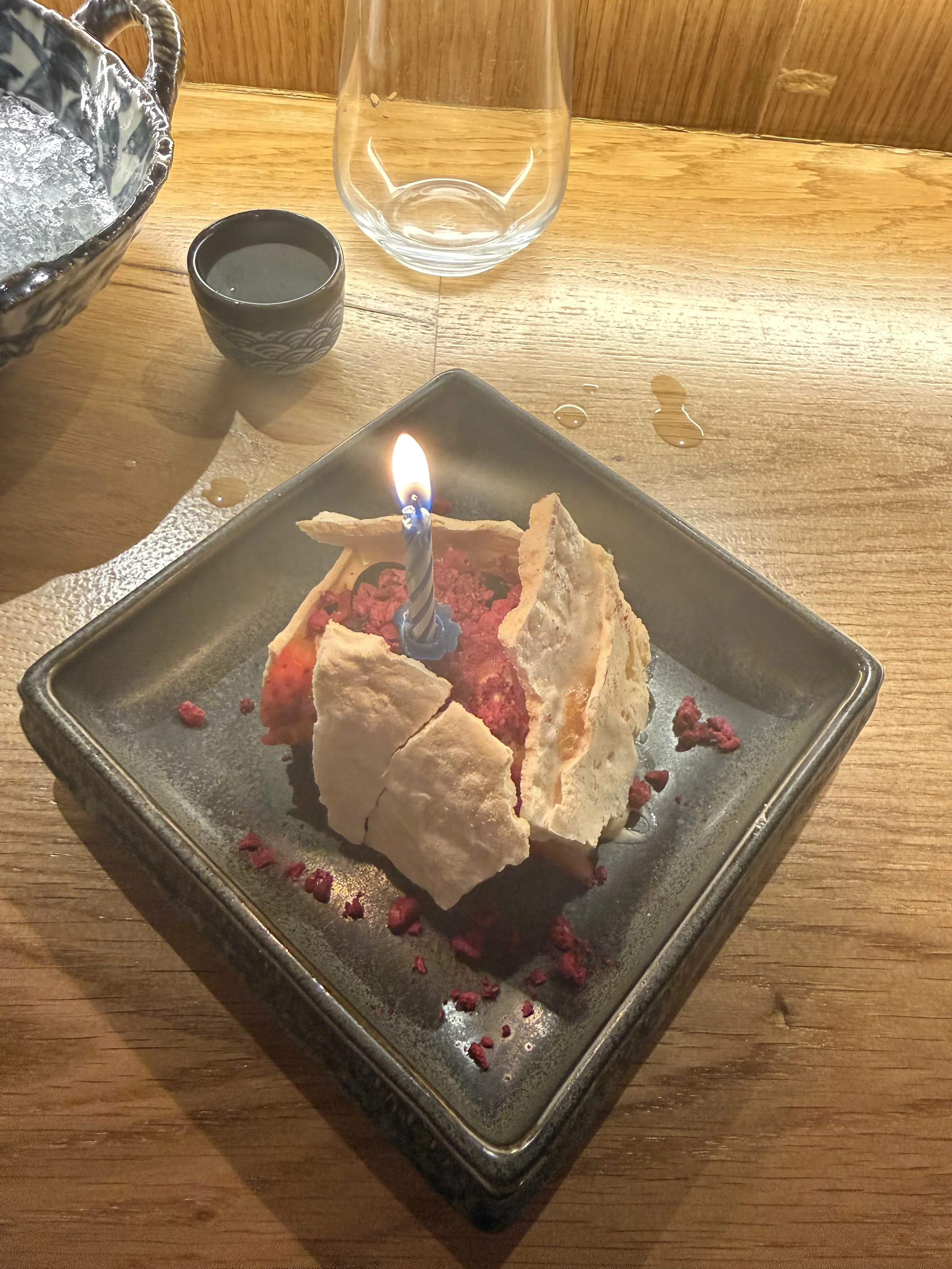
As the meal drew to a close, the chef presented a final piece, a deserrt with a flourish I hadn't expected: a lit candle. He smiled and said, "For your birthday." The gesture was simple, but it landed with profound tenderness. I felt seen. Not pitied for dining alone, but respected for choosing this experience.
Sitting at that counter, savoring the last bites, I felt a fullness that had nothing to do with physical satiation (even though I couldn’t possibly take another bite). It was emotional, spiritual even. I had given myself permission to take up space, to be celebrated, to receive care without apologizing for it.
The restaurant had been the perfect partner for this solo celebration. The service was professional and warm, never making me feel rushed or out of place. The other diners at the counter, mostly couples, existed in their own bubbles, equally absorbed in their experiences. No one looked at me with pity or curiosity. I was simply another person honoring good food and skilled craft.
As I paid the bill and prepared to leave, the chef thanked me for coming. "Happy birthday," he said again. "I hope you enjoyed it, and thank you for choosing us to spend your special day.”
"It was perfect," I told him. And I meant it.

Walking home through the quiet streets of San Sebastián that evening, I reflected on what this meal had given me beyond exceptional food. Here's what I learned:
Solo experiences aren't second-best, they're different, and often deeper. Without the need to manage social dynamics or moderate my reactions for others, I was free to be completely present with the experience. I could focus entirely on the food, the craft, and my own internal landscape.
Treating yourself well isn't selfish, it's essential. Self-care isn't bubble baths and face masks (though those are lovely too). Real self-care is making choices that honor your worth, even when, especially when, no one else is watching.
Trust is a practice. Omakase required me to surrender control and trust the chef's expertise. That trust mirrored the larger trust I'm learning to have in my own journey. That I don't need to have everything figured out, that it's okay to not know what's coming next, that sometimes the best experiences arise when we stop trying to orchestrate every detail.
Food is culture, and culture is connection. The fusion of Basque and Japanese traditions at Kai reminded me that beautiful things happen when we honor multiple identities simultaneously. As someone navigating life between cultures (American roots, Spanish present, global aspirations), I found deep resonance in a culinary philosophy that says you don't have to choose. You can be both. You can honor all your complexities.
Celebration doesn't require an audience. Our culture often suggests that milestones only "count" if they're witnessed and validated by others. But the most meaningful celebrations are often the quietest…the ones where we simply pause, acknowledge our growth, and say thank you to ourselves for continuing to show up.
An Invitation to You
If you're reading this and feeling the pull toward a solo dining experience, whether for your birthday, a personal milestone, or simply because you want to, I encourage you to try it. Start small if you need to. A coffee alone. A lunch at the counter. Build up to that dinner reservation that makes your heart flutter with equal parts excitement and nervousness.
When you go, here are some things I learned:
Choose a restaurant with counter seating. It creates natural interaction with staff and makes you feel less exposed than sitting at a table for two by yourself.
Dress for yourself. Wear something that makes you feel confident and celebratory. It sets the tone and signals to yourself that this matters.
Put your phone away. (Except for pictures, of course!) This one is hard, I know. But try to be present. Notice the flavors, the textures, the craftsmanship. Let yourself be bored for a moment if boredom arises. That's where the interesting thoughts often emerge.
Engage with the staff when it feels natural. Ask questions about the dishes. Learn about the ingredients. Most chefs and servers genuinely enjoy sharing their knowledge, and it enriches the experience.
Give yourself permission to enjoy it fully. Don't minimize your experience or apologize for taking up space. You deserve to be there exactly as much as anyone else.
The Gift That Keeps Giving
Days have passed since that birthday dinner, and I can’t stop thinking about it. Not just the flavors (though I can still taste that txangurro gyoza and the buttery richness of the toro) but the feeling of it. The sense of agency and self-respect. The quiet joy of choosing myself.
That evening at Kai Sushi has become a touchstone for me, a reminder of what becomes possible when we stop waiting for permission and start giving it to ourselves. It reinforced a truth I'm still learning: the relationship you have with yourself is the foundation for everything else in your life. When you nurture that relationship with intention and care, everything shifts.
San Sebastián has taught me so much about food: its power to carry culture, to build community, to tell stories across time and geography. But it's also teaching me about living. About being present. About honoring both tradition and innovation. About the courage it takes to sit at the counter alone and say, "Yes, I'm here for myself, and that's enough."
As I continue my studies in Gastronomic Sciences and navigate this transformative period of my life, I'm learning that every meal is an opportunity, not just to nourish the body, but to practice presence, to cultivate gratitude, and to affirm our own worth.
My birthday omakase at Kai Sushi wasn't just a meal. It was a love letter to myself, written in the language of fish and rice, trust and presence, Basque tradition and Japanese precision. It was the best possible thing I could have done for myself.
And if you're wondering whether you should take that leap, whether it's a solo birthday dinner or another act of self-celebration that makes you nervous, I hope you'll take this as your sign.
Do it. You're worth it. You've always been worth it.
Have you ever celebrated a birthday or milestone alone? What did that experience teach you about yourself? I'd love to hear your stories in the comments below.
If you're in San Sebastián and looking for an exceptional dining experience that honors both Japanese craft and Basque tradition, Kai Sushi is at Arrasate Kalea 5. Reservations are essential and can be made up to three months in advance. Counter seating is highly recommended for the full omakase experience.
