Santo Tomás Day: When Food, Farmers, and Rent Built a City
I almost did not go.
It was December 21 in San Sebastián, the kind of winter day that does not feel especially wintery. Cool air, soft sky, that familiar Basque indecision about whether it is going to rain. I was inside with my notebook open, doing my end of year reflection work. Thinking about what I want to carry into 2026. Thinking about what I want to release. Thinking about how I want to move with more intention and less urgency.
I told myself I had a good reason to stay in.
I told myself I could always go next year.
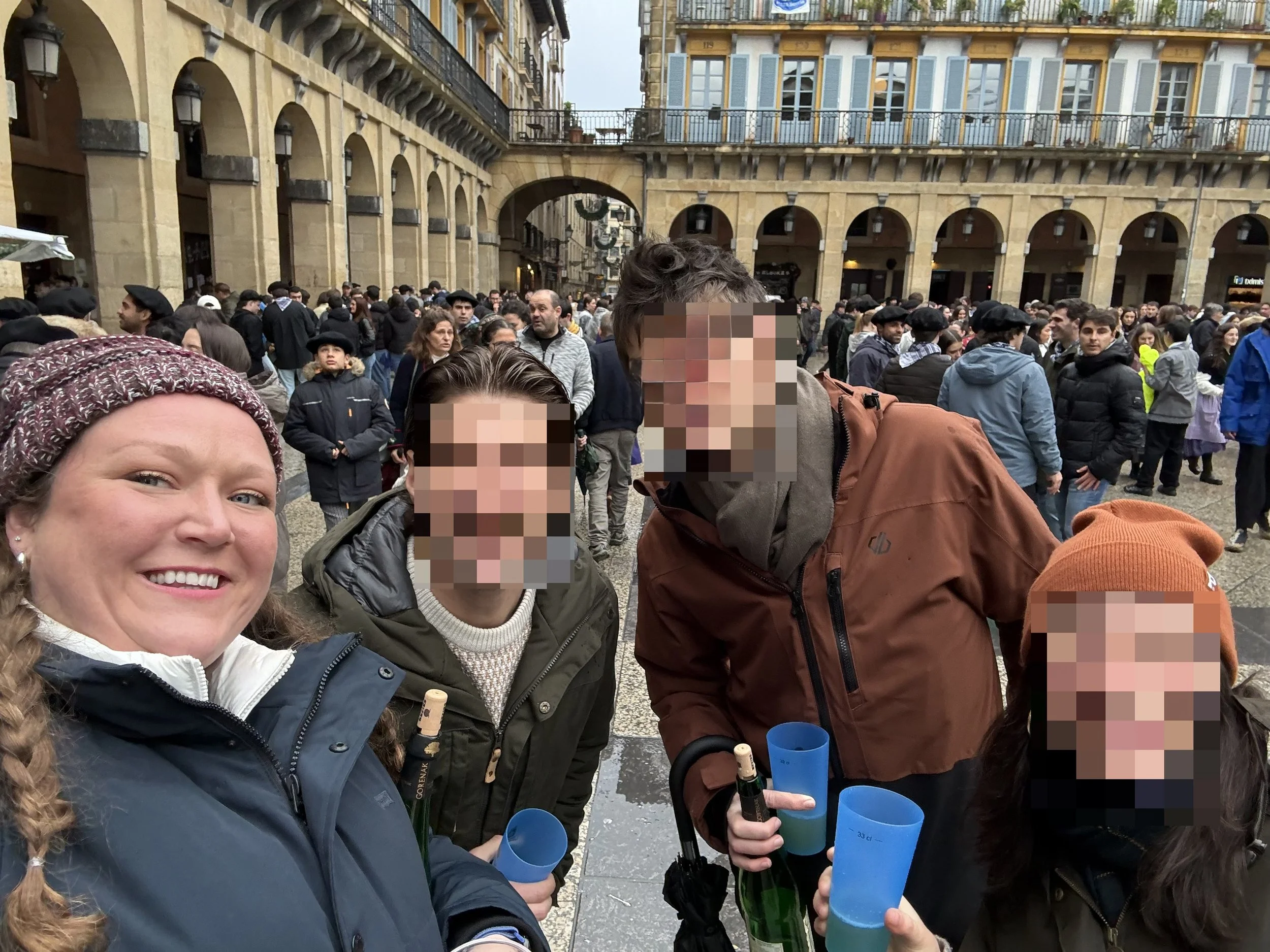
Then a few messages came through. Friends from my master’s program were meeting up for Santo Tomás. Fellow students. Fellow food people. The kind of friends who make a city feel less like a place you moved to, and more like a place you live in.
So I put my coat on. I walked out the door. And I am so glad I did.
Because what I stepped into was not just a festival. It was a living, breathing story about food, labor, tradition, and the quiet ways history still shapes what we eat, what we value, and who gets to belong.
A morning that smelled like smoke, corn, and sausage
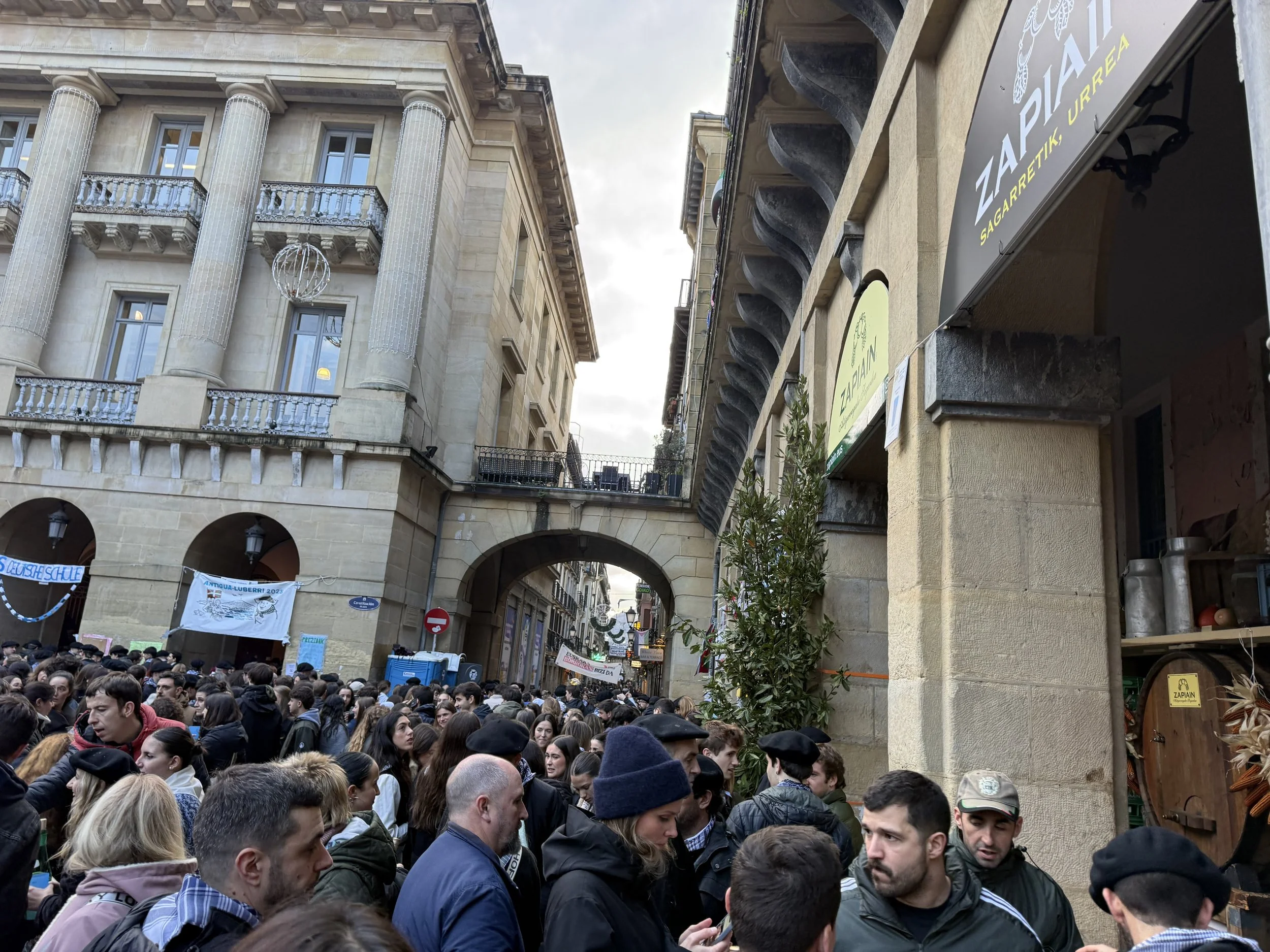
The closer I got, the louder the city became.
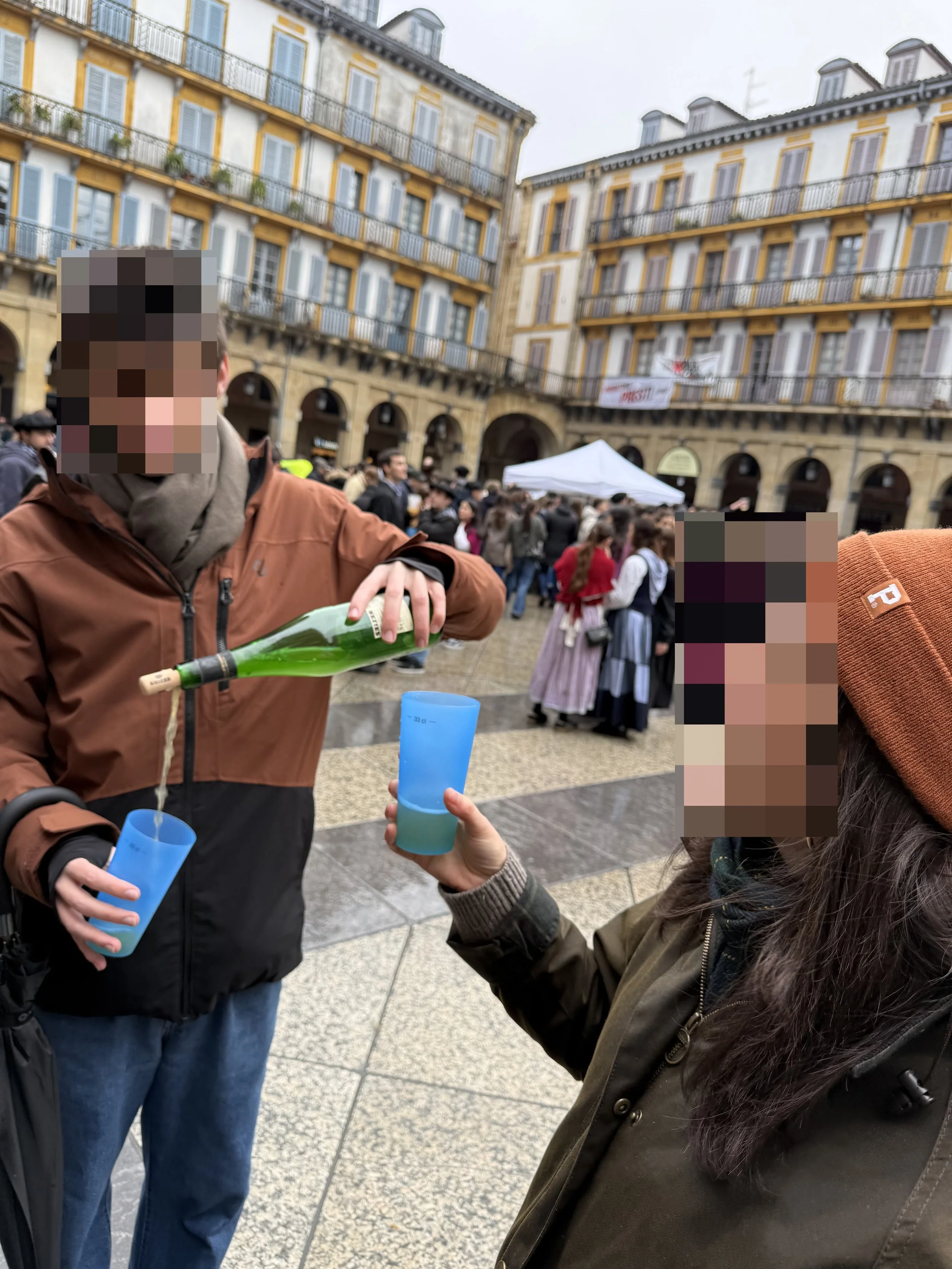
At first it was just more people than usual. More movement. More laughter. Then the smell hit, smoky and savory, the kind of smell that bypasses your thoughts and goes straight to your body. Txistorra sizzling somewhere nearby. Warm bread. Cider. And that faint, unmistakable scent of winter crowds: damp coats, street air, and anticipation.
Santo Tomás takes over Donostia. It is held every December 21, and for a day the city turns into a rural market where txistorra is the unmistakable star.
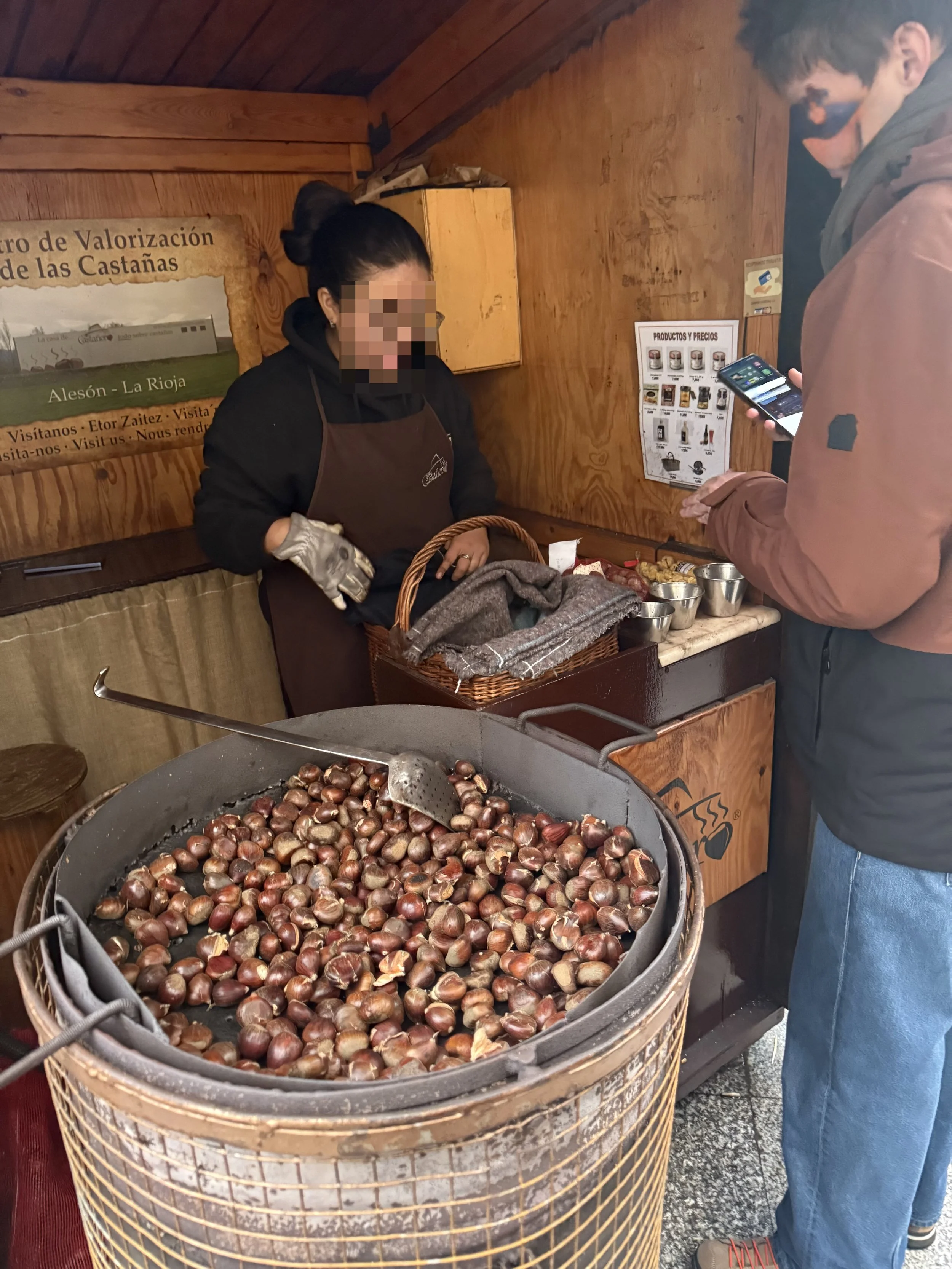
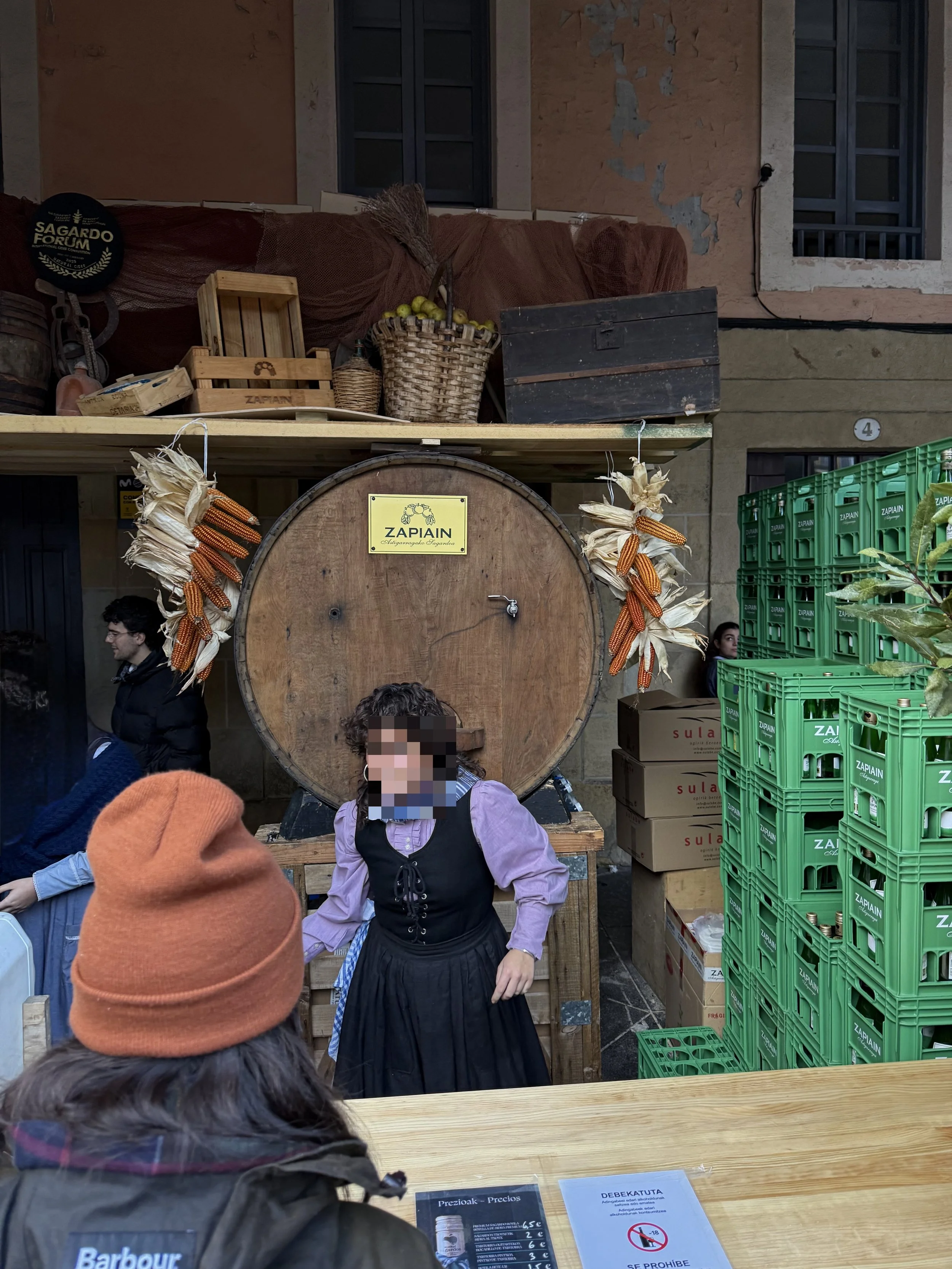
Stalls pop up across the center and the Old Town. You will see farmhouse products, crafts, and the kind of food that makes sense when you are eating outside in winter: cheese, honey, cider, cakes, and lots and lots of sausage.
And then there are the clothes.
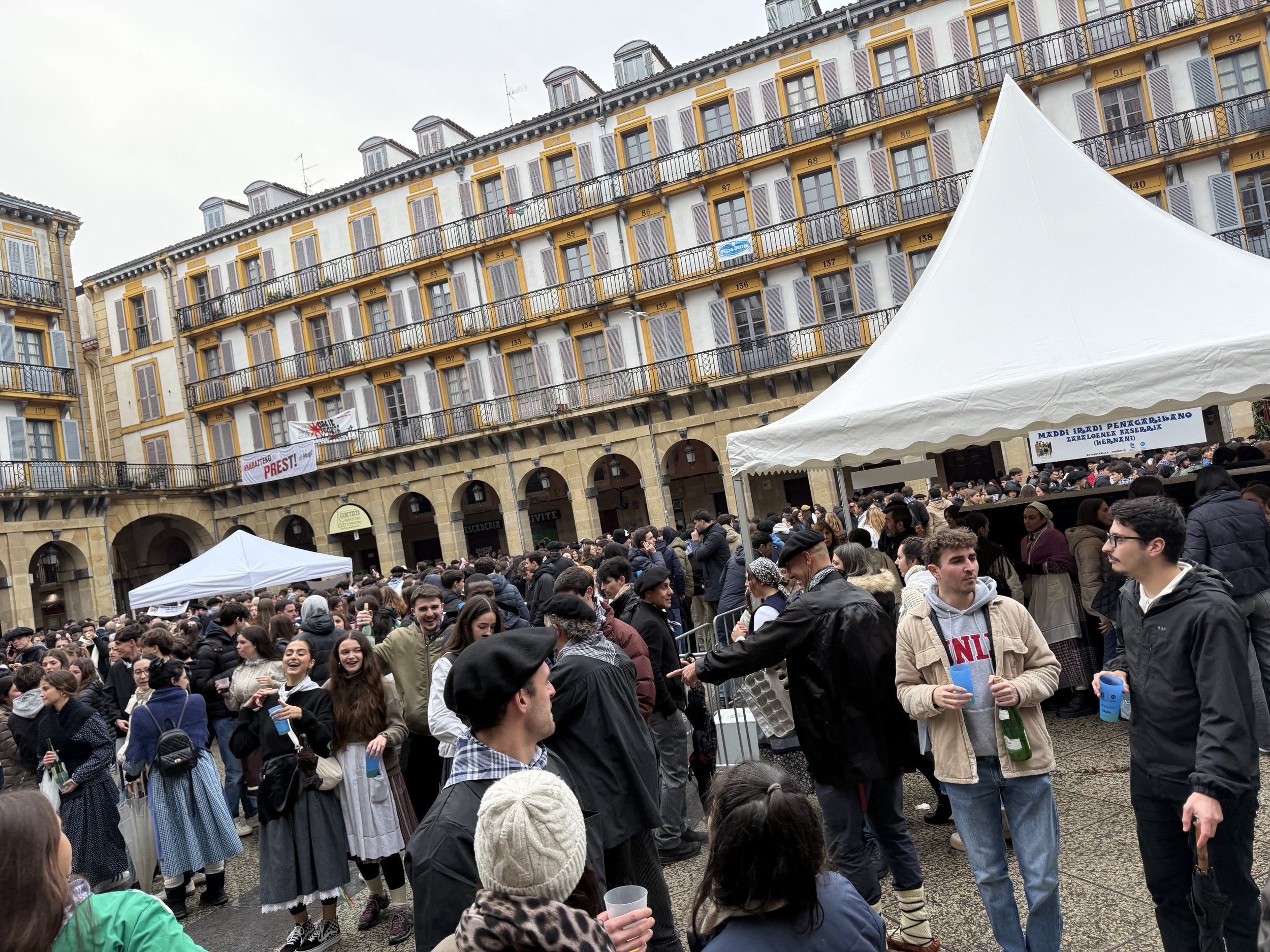
Baserritarra outfits appeared everywhere. Aprons, scarves, layered textures, boots that look built for mud and real work. It felt like the city was participating in a collective act of remembering.
I met up with my friends from grad school and felt that small relief that comes from not doing something alone in a new place. Together we moved like a little current through the crowd, stopping and pointing and laughing, getting pulled toward whatever looked most alive.
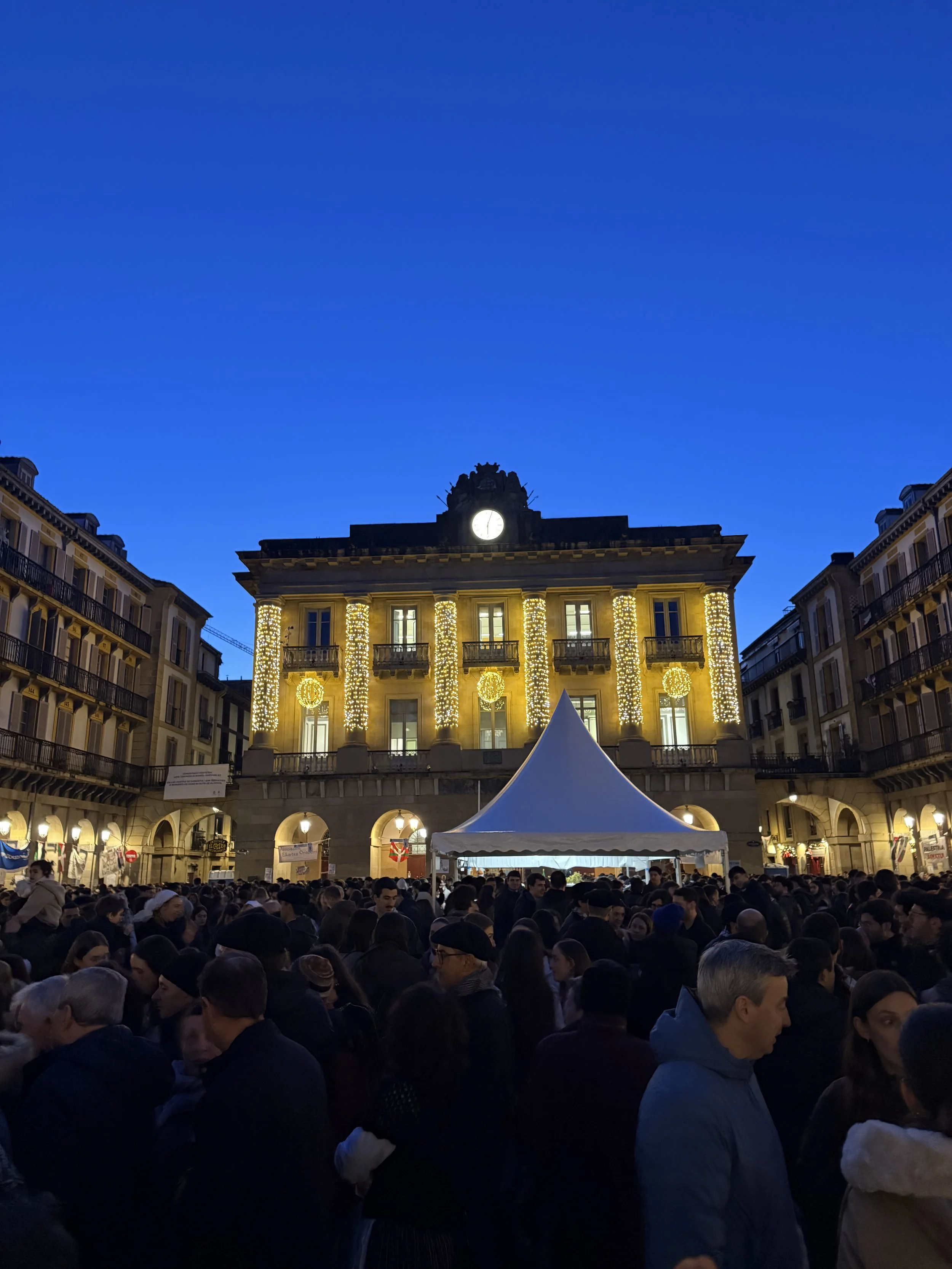
I was genuinely shocked by how many people were there. Even with imperfect weather, it felt like the city had decided, collectively, that this mattered.
There were animals too. Not as decoration, but as a reminder. This tradition comes from rural life, and rural life includes bodies, barns, feed, mud, and the deep tenderness that shows up when kids get to meet animals up close. Donostia Kultura even organizes an animal exhibition as part of the day, which explains why there were so many families gathered in that softer pocket of the chaos.
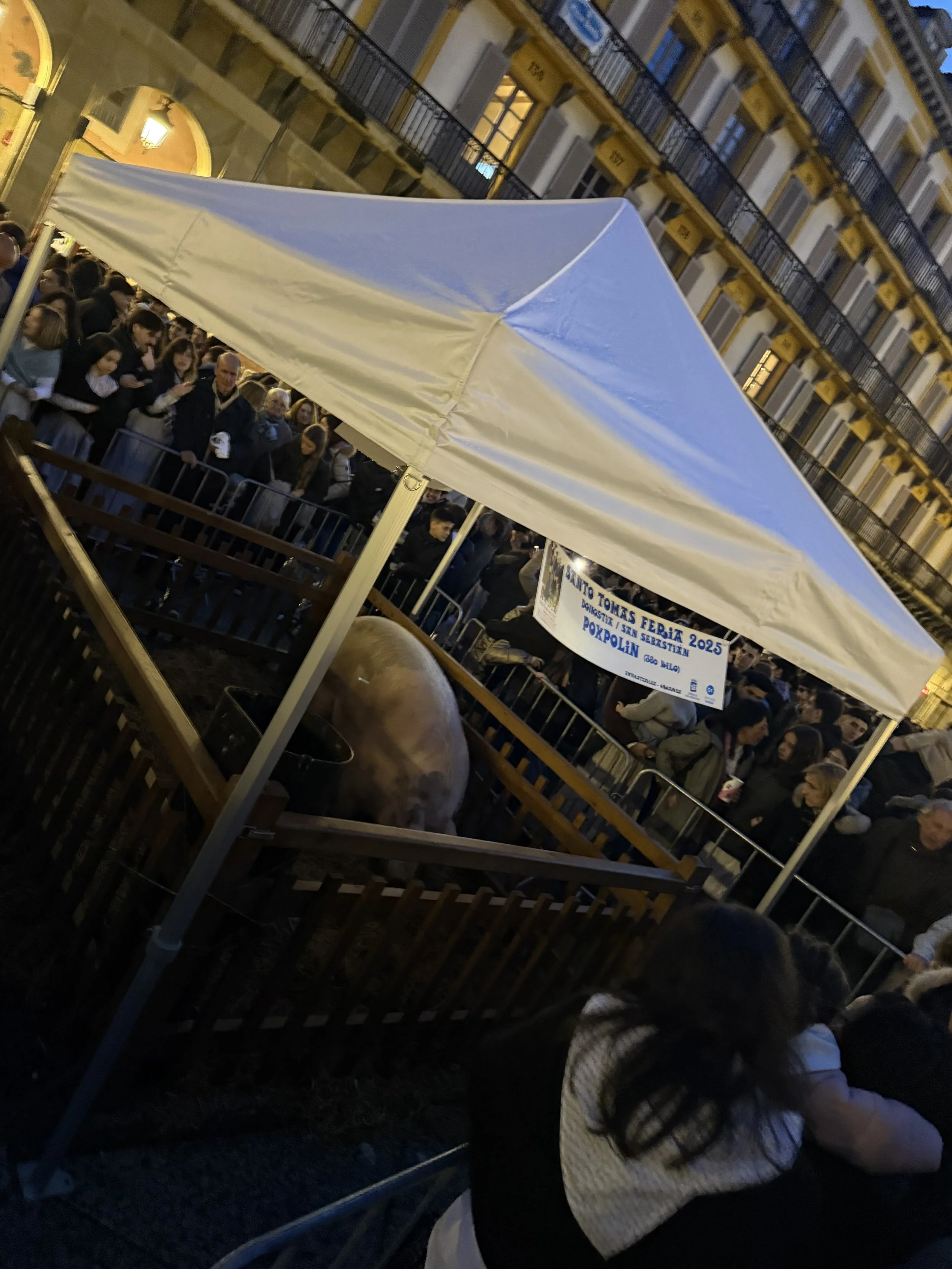
And then there was the pig. The prize pig.
Standing there, watching people gather around it, I felt this weird mix of amusement and awe. Pigs are cute, yes, but in food history they are also survival. Winter security. A savings account you can eat. Food power in its most honest form.
I learned later that in Donostia the fair even names the pig each year. In 2025, the featured pig was named Poxpolin, raised outdoors, and expected to weigh around 370 to 380 kilograms for the day.
At some point, I ate something that tasted like the whole point of the festival.
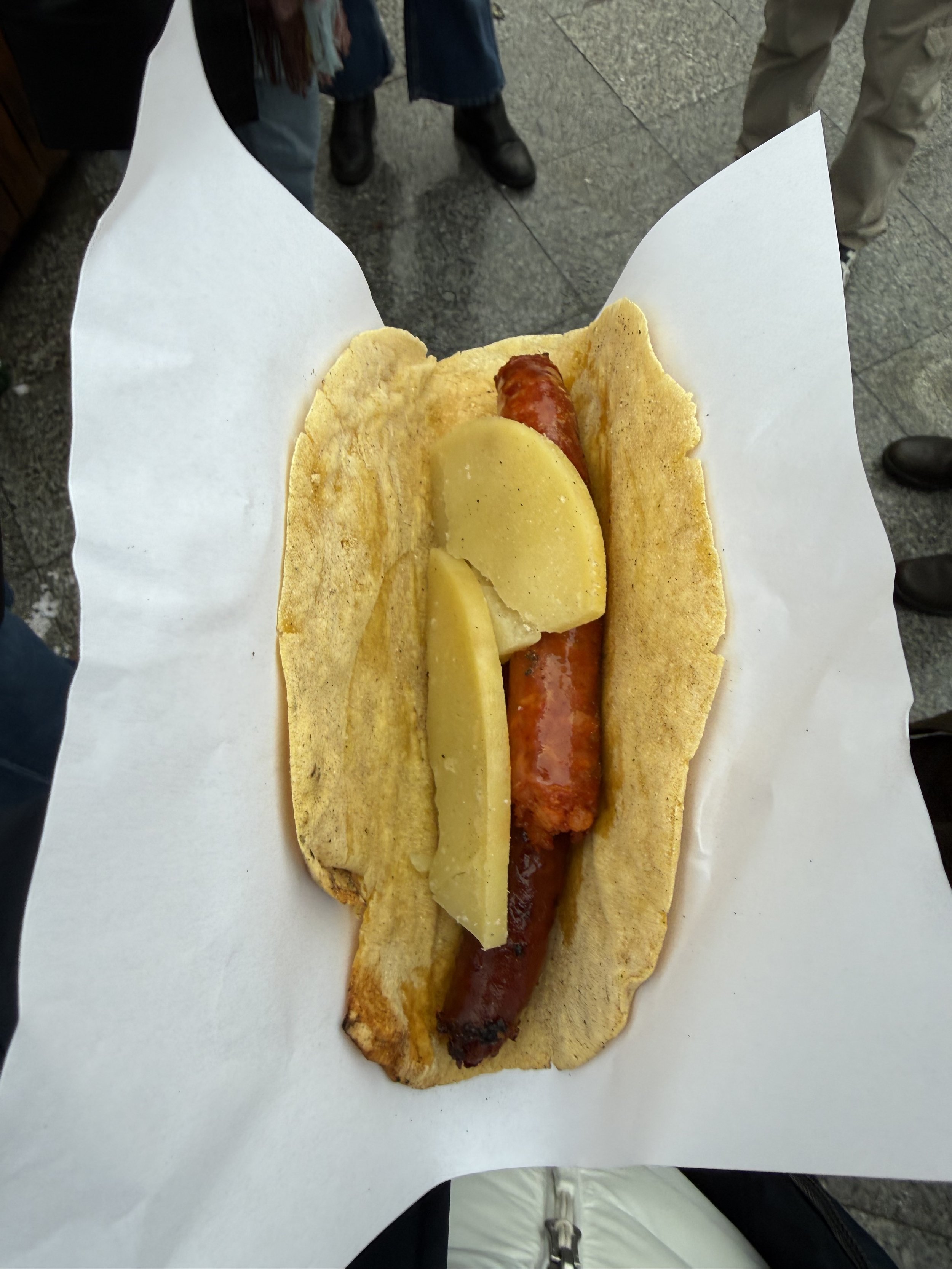
A warm talo, a simple corn flatbread cooked on a griddle, wrapped around txistorra. Mine also had cheese, and I swear there was a little tortilla in there too, like the festival was determined to make sure I left with actual warmth in my body. In the Basque countryside, talo was historically a practical everyday food made with corn flour because wheat was not always as accessible. Now it shows up most loudly in celebrations like this.
It was not trying to be photogenic.
It was trying to be sustaining.
And it was.
Why December 21
Santo Tomás is festive now, but it was not born as a party.
Its roots are economic.
Multiple local sources tell the same story: in the nineteenth century, many farmhouses in Gipuzkoa were worked by tenants. The owners often lived in San Sebastián. Once a year, on Santo Tomás, baserritarrak came into the city to pay the rent for the land they cultivated.
And because you do not waste a trip into town, they used that day to sell what they produced and buy what they could not easily get in the villages. Over time, those practical exchanges became a fair, and the tradition took shape in and around Plaza de la Constitución.
One detail I love is how specific the old exchange economy was. Donostia Kultura describes tenants arriving with the rent money and a couple of capons, and the landowners gifting back cod and chocolate as thanks.
Even if that exact ritual is no longer common, you can still feel the structure underneath today’s celebration.
Land. Labor. Payment. Food.
City and countryside stitched together for a day.
Some accounts also note that rent was traditionally due on Saint Martin’s Day in November, but the deadline often stretched to Santo Tomás in late December. That makes the date feel even more like a threshold. The end of the year. The turn into winter. The moment when the cycle closes and everyone is taking stock. Basque Country Tourism
Food as currency, food as power
Here is the thing that keeps echoing in me:
Food was not just food. It was rent. It was obligation. It was proof of labor.
When farmers came into the city to pay land dues, it was not just a financial errand. It was a power relationship. It was a reminder that land ownership is power, and the people who work the land are not always the people who own it.
This is where the modern contrast hits.
In most of our current food system, the chain is deliberately hidden. We tap a card. We buy something wrapped in plastic. We rarely see the hands. We rarely see the weather. We rarely see the consequences.
Convenience gives us distance. Sometimes that distance feels like freedom. Sometimes it feels like amnesia. Santo Tomás collapses that distance.
Even in its modern form, even with tourists, even with phones held up for photos, the heart of the day still says: food comes from people.
People who wake up early. People whose work is seasonal, physical, and repetitive. People who feed the city. Food is still currency. We just hide the exchange behind packaging now.
What I noticed on the ground
Because the weather was not perfect, the crowd felt more local. Less glossy. More true.
It was mostly locals, which made the energy feel less like a performance and more like a tradition people actually live.
The dominant food was unmistakable: txistorra everywhere. A thin pork sausage, an embutido made with minced pork plus garlic, salt, paprika, and other spices, cooked hot so you can eat it standing up. San Sebastián Turismo
There were people dressed in traditional outfits, not like a costume party, but like a collective agreement. We remember where this came from.
There were kids. There were grandparents. There were groups of friends moving together like flocks.
There were also moments where it got rowdy and dirty later in the day. Cups on the ground. Greasy napkins. Streets that looked like they had held a thousand small moments of joy, then did not quite know what to do with the aftermath.
I think I expected European tradition to look neat. But traditions are not neat. Living culture is not tidy.
Living culture is bodies and weather and food and laughter and too many people and a street that has to be cleaned the next morning.
That is not a flaw. It is evidence.
It is how you know it is not only for visitors.
Why this matters to Gastronomic Science
Since starting this master’s program, something has shifted in me. I used to go to markets and festivals as a person who loves food. Now I go as a person who cannot stop seeing systems.
Santo Tomás is a market, yes, but it is also a map.
Production: what is grown, raised, made
Distribution: how it enters the city and who gets a stall
Consumption: how people eat, gather, celebrate
Culture: what gets preserved, what gets performed, what gets adapted
Power: who profits, who labors, who is visible, who is not
It is also a lesson in seasonality and preservation.
Txistorra is not just a sausage people like. It is part of a preservation logic. Meat transformed so it lasts. Cider too. Cheese too. Honey too. These are foods with memory built into them, foods that exist because people figured out how to store calories and flavor through winter.
Festivals like this are living food archives. They hold techniques. They hold tastes. They hold social rules about what matters. And they make those things visible.
If you are studying food systems, you do not have to be in a lab to learn.
Sometimes the lab is a crowded plaza on December 21.
What reframed for me: labor, tradition, and sustainability
Before moving here, I thought of tradition mostly as something aesthetic. Something you watch. Something you admire. Now I am starting to understand tradition as something functional. Tradition is a way of storing knowledge. It is what people do when they have lived long enough to know what works.
Santo Tomás reminded me that a lot of food traditions exist because they solved real problems:
How do you preserve meat through winter? How do you use what is available in a specific climate? How do you keep rural life connected to urban life? How do you make sure the people who feed the city are not completely forgotten by the city?
It also made me think about sustainability in a way that is not just trendy. Sustainability is not only recycling or buying the right product.
It is also about whether farmers can survive economically. It’s about whether local knowledge stays alive. It’s about whether food labor is respected rather than hidden. It is about whether a city still knows how to gather around the people who feed it.
Yes, I noticed the waste and the mess. But I also noticed something else: people showing up.
Showing up to buy directly. Showing up to participate in a tradition that links city to countryside. Showing up to remember that food is not magic. It is work.
That is not perfect sustainability. But it is cultural sustainability.
And cultural sustainability matters because without it, all the technical solutions in the world still leave us with a food system people do not feel responsible for.
The strange part: how much my perspective has changed
I keep having moments like this lately, moments where I realize I am not seeing food the way I used to.
At the beginning of this program, I thought I would learn facts.
I did not realize I would learn a new way of looking.
Now even at a festival, I am thinking about labor history. About access. About value systems. About how culture preserves itself through taste and repetition. About what gets celebrated publicly and what stays invisible.
It feels intense, in the best way. Because it means the program is working. It is changing me from the inside out.
And it makes me want to keep writing, because I do not want to lose these insights. I do not want them to blur into the background.
I want to remember the moment I stood in a crowd on a mild winter day, holding a warm talo, and realized I was watching history move through food.
Why Santo Tomás matters beyond the festival
Santo Tomás Day is not just a party.
It is a reminder that food systems have always been political. That land has always shaped life. That labor has always fed cities. That tradition can be both celebration and evidence.
If we want better food futures, more sustainable, more just, more resilient, we cannot pretend the past does not matter.
Because the past built the present. And sometimes the best way to imagine a future is to stand in a crowded street on December 21 and remember:
Food is not just what is on the plate. Food is history. Food is power.
Food is people. And it is worth paying attention to.
Practical note if you want to experience Santo Tomás in Donostia
If you are visiting, it helps to know that the fair is officially a one day event on December 21, with activities generally running from 10:00 to 20:00.
Stalls and activities are spread across multiple points in the center and the Old Town, not just a single plaza, so you can treat it like a walking route through the city.
For further reading:
Donostia Kultura, Feria de Santo Tomás, program and history
Donostia City Council news, Santo Tomás programming and citywide details
Smithsonian Folklife, Basque talo background and recipe context
Basque Country Guide, talo with txistorra explainer