Bilbao: A Weekend Away, a Bigger City, and What Contrast Teaches You
Leaving San Sebastián was easy.
Not emotionally, because Donostia is starting to feel like my home base, but logistically. I know the roads out now. I know the rhythm of the region a little better. I am not brand new here anymore.
But I forgot something important: Adventures cost money in a thousand small ways. The rental car was expensive. The tolls were expensive. Parking was expensive.
And driving in a new place carries its own tax, not the kind you pay with euros, but the kind you pay with your nervous system.
Still, I wanted an adventure.
I wanted to step outside my routine and remind myself that I came here not only to study, but to live. So I went. And Bilbao gave me exactly what I needed. Contrast.
Arrival: Chicago feelings in the Basque Country
When I arrived, the first thing I felt was scale. San Sebastián is a city, but it often feels intimate. Walkable. Familiar quickly. Human scale.
Bilbao felt like a full metropolitan body.
It reminded me of Chicago in the way a place can feel energetic and anonymous at the same time. Bigger streets. Faster movement. A younger crowd. More languages in the air, including more English than I have gotten used to hearing in Donostia.
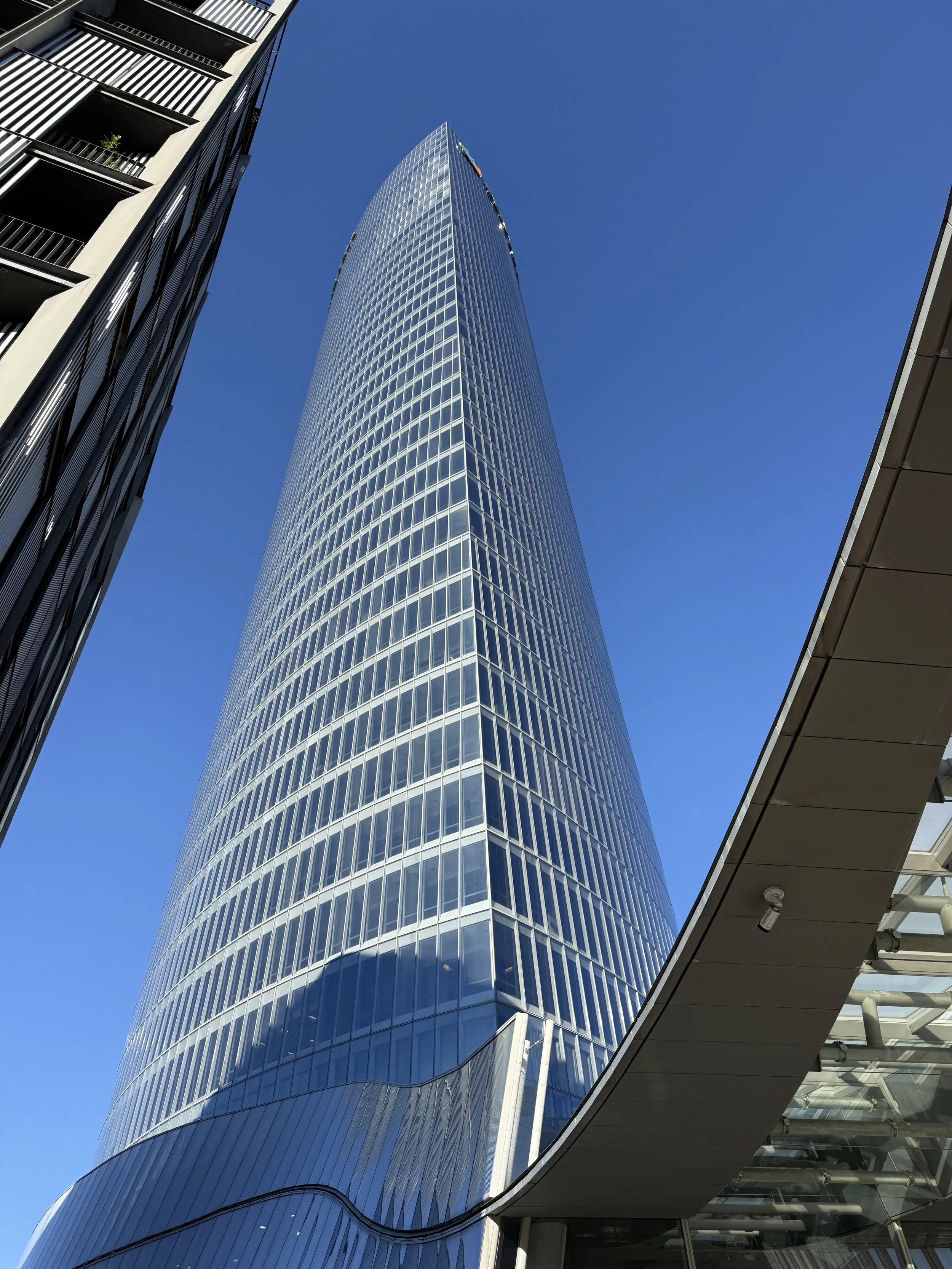
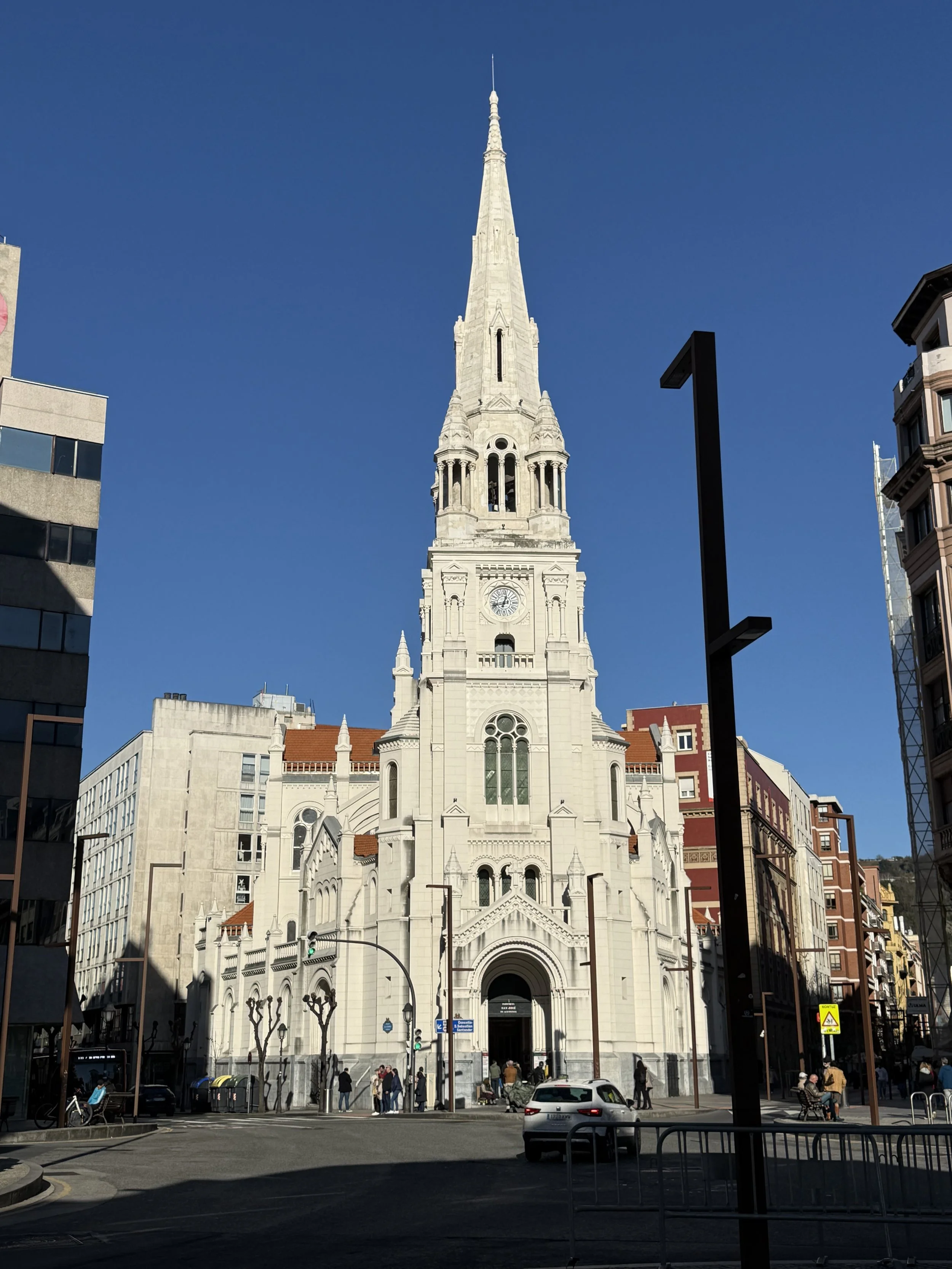
The architecture was historic and detailed, then suddenly there were taller buildings, more verticality, more density. My mood shifted before I could name why. Cities do that.
I felt safe, but slightly uneasy, not because anything was wrong, but because I did not know the map yet. I did not know the rules. And I had the car.
The car added stress I underestimated: where to park, what signs meant what, whether I was accidentally breaking a rule I did not know existed. Spoiler alert: I later learned I got a speeding ticket on the way back and had to pay a fine. Whoops.
It is a specific kind of pressure, being responsible for a thing in a place you do not fully understand. I could feel it.
Bilbao, as a place that has worked
Bilbao is not only a tourist city. It is historically a port and industrial city, built on the Nervión River and shaped for centuries by trade and labor. That matters because you can feel it.
San Sebastián reads coastal and culinary and postcard beautiful.
Bilbao reads like a city with muscle memory. A city that has worked. A city that has had to reinvent itself.
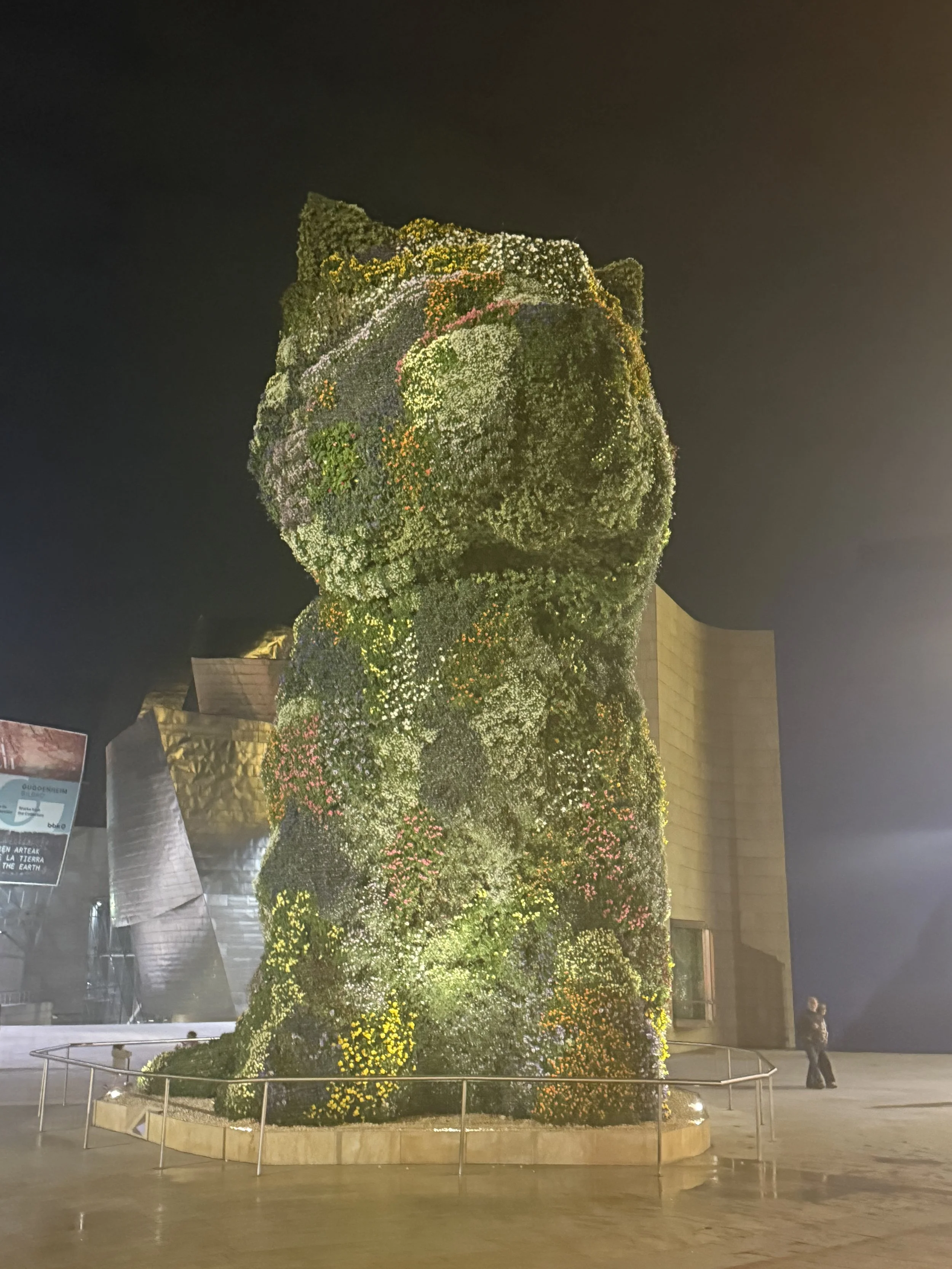
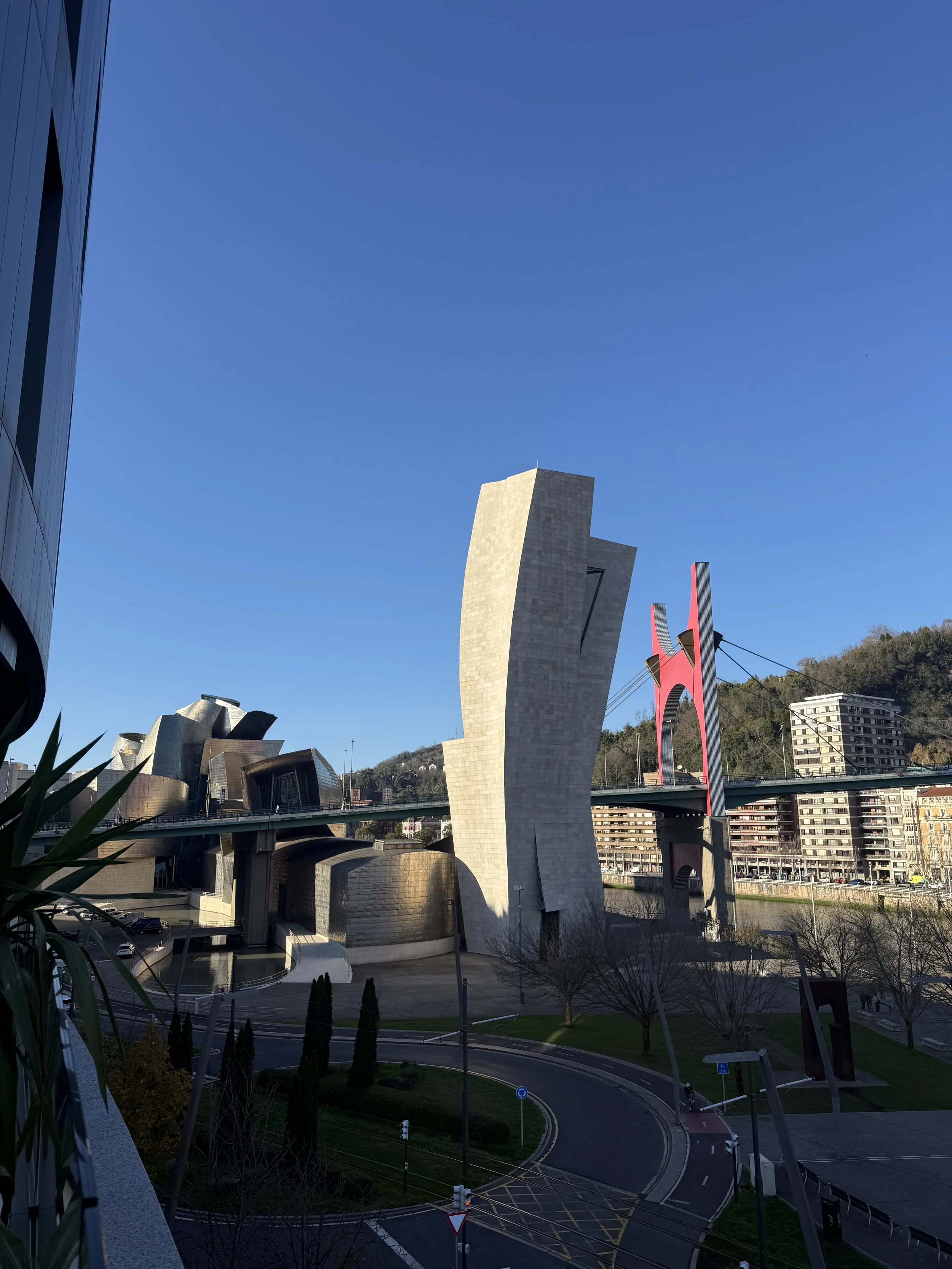
In recent decades, Bilbao became internationally famous for urban transformation, especially through major redevelopment and the cultural gravity of the Guggenheim Museum. People even talk about a “Bilbao effect” or “Guggenheim effect” to describe how a flagship cultural project can change a city’s global image and economy.
But the transformation story only makes sense if you remember what came before: an industrial economy, environmental and infrastructure challenges, and then reinvention.
Walking through the city, I kept noticing that layering.
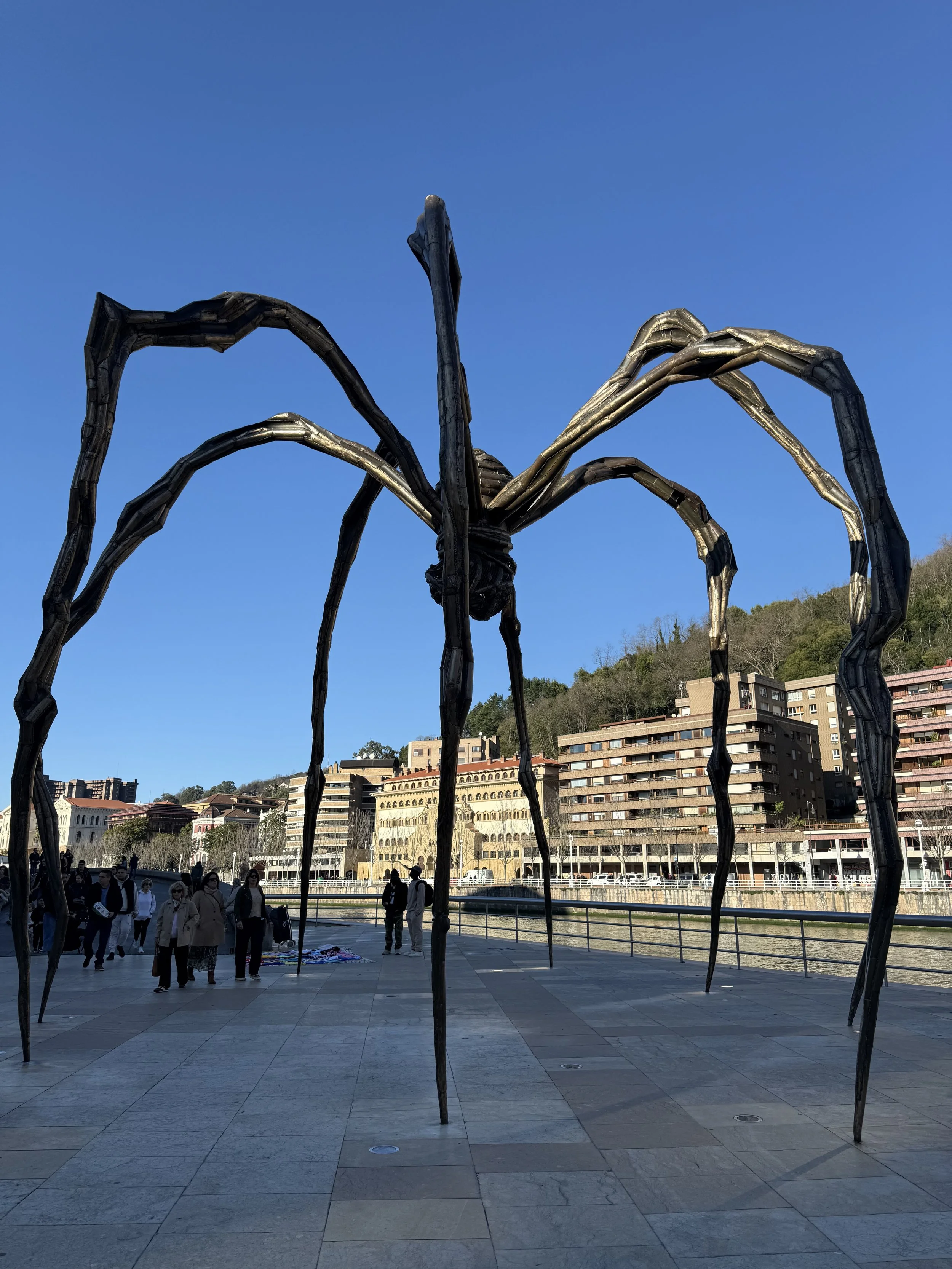
Old stone. New steel. Historic facades beside modern lines. Tourism beside ordinary errands.
It is not one story. It is several, braided.
Food spaces: familiar, but not the same
The food culture felt familiar enough that I could relax. This is still the Basque Country. The relationship to food is still serious, still social, still woven into daily life.
But the food spaces felt different from Donostia.
In San Sebastián, food often feels intimate. Pintxo bars packed into small streets. Neighborhood places where routines form quickly.
In Bilbao, food felt more sprawling. More spread out. More volume. More big city energy where you can disappear into a crowd.
I noticed myself feeling both comforted and slightly detached. Comforted because food is a language I can read even when my Spanish fails me.
Detached because in a bigger city, anonymity is easier, and anonymity can feel freeing or lonely depending on the moment.
One of the clearest examples of Bilbao’s scale is its markets. Bilbao Turismo describes Mercado de la Ribera as a reference point for shopping across Bizkaia, and notes that it was recognized in 1990 by Guinness as the most complete municipal food market, at that time described as the largest in terms of traders and stalls and the biggest covered market by area in Europe. BilbaoTurismo
Even if you do not care about records, that idea matters. Because markets are not only places to buy food.
They are maps of a city’s daily life. They show you what a place values, what it eats, what it sells, and what kind of public space it makes for feeding people.
Photography as attention, and as grounding
I took so many photos. Not only because things were pretty, but because I am learning how I pay attention.
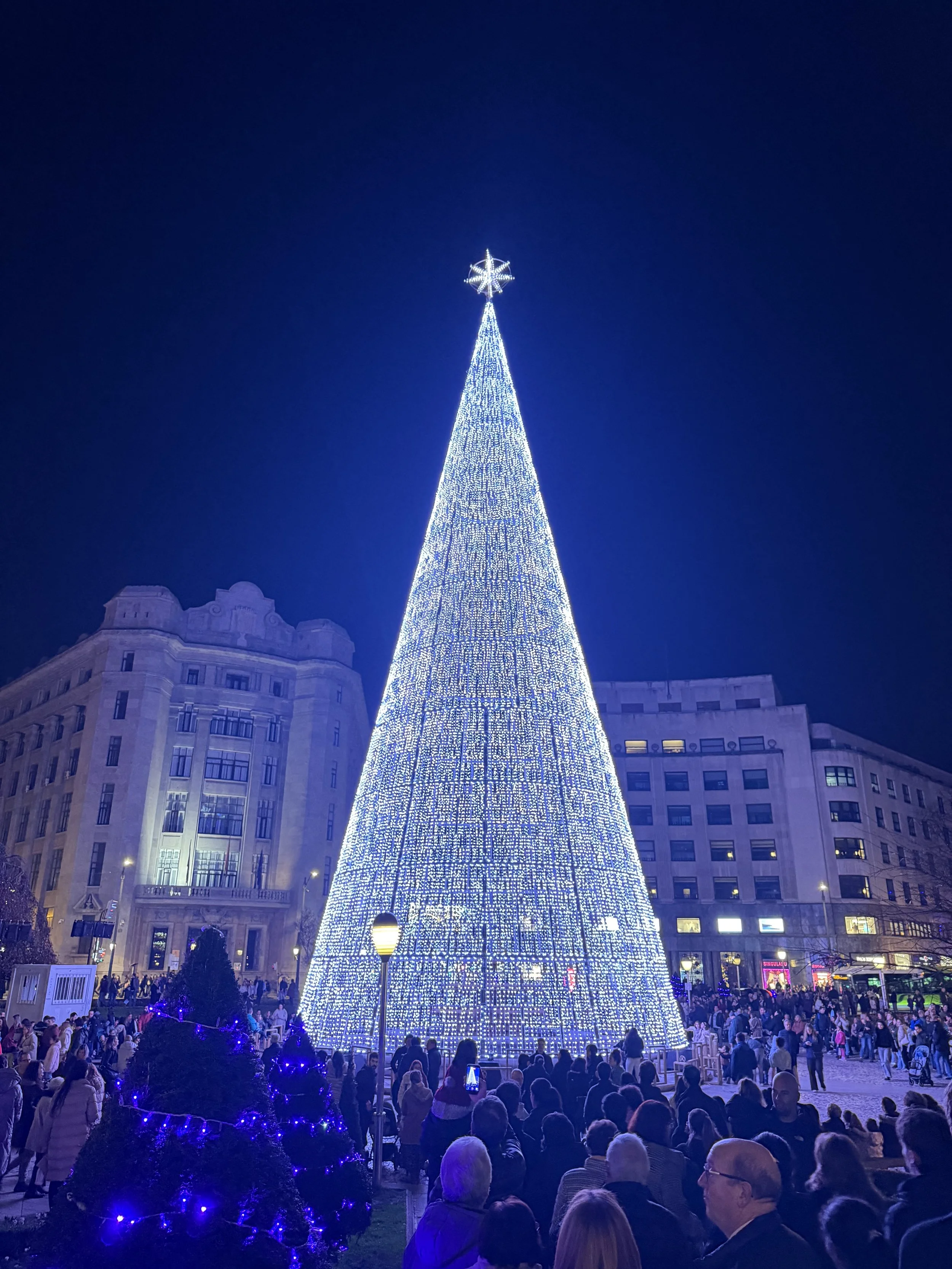
I photographed contrasts: old against new. Warm light against gray sky. Streets with history beside buildings with ambition.
Photography, for me, is not only capturing a place. It is proving I was present. It is a way of saying: I saw this. I was here.
And it is also a nervous system tool.
Sometimes when a place feels unfamiliar, my brain wants a task. Something concrete. Something to focus on.
Photography gives me that. It turns uncertainty into curiosity.
The truth: the trip was fun, and also surprising
Overall, the trip was fun. The hotel was fun. The change of scenery was fun. The feeling of doing something different was fun.
There is something psychologically important about leaving your routine sometimes, especially when you are building a new life. It reminds you that your world is bigger than your syllabus.
But I was also surprised by how it turned out. Not in a dramatic way. In a quiet way.
I think I carried an internal fantasy of what the weekend would feel like. More effortless. More cinematic.
Instead it felt real. Expensive. A little stressful. A little disorienting. A little like, I am responsible for myself in a place I do not know. Which is honestly the truest form of travel.
The surprise was not that Bilbao was not great. The surprise was that adventure is not always relaxing. Sometimes it is just growth in disguise.
What Bilbao taught me about San Sebastián
Here is what I did not expect:
Going to Bilbao made me appreciate San Sebastián more. Not because one is better. Because contrast teaches you what you actually need.
Bilbao showed me the value of a larger city: the energy, the variety, the multilingual hum, the feeling that you can reinvent yourself inside a crowd.
Bilbao also reminded me how much I love the intimacy of Donostia: the human scale, the way routines form, the way I am slowly learning where I belong.
Bilbao did not pull me away from San Sebastián. It anchored me back to it, with more clarity.
Practical note if you are planning a day trip from Donostia to Bilbao
If you want a lower stress version than driving, there are frequent coach options between San Sebastián and Bilbao. Checking an official operator page is usually the most reliable way to plan. It does take a lot of time, anout 3 hours one way, but may be less stressful for you.
For trains and regional transport in the Basque Country, Euskotren is one of the key public providers, and their official site is the best place to confirm routes and service notices
External references worth checking out
Britannica, Bilbao overview and context
Bilbao Turismo, La Ribera Market page
Mercado de la Ribera official site
Guggenheim Museum Bilbao official site
Guggenheim Bilbao, plan your visit page
Harvard City Leadership Initiative, The Bilbao Effect case
Smarthistory, Guggenheim Bilbao background
Alsa, coach route San Sebastián to Bilbao