Inside GOe: Where Architecture Meets Gastronomy on the Camino de Santiago
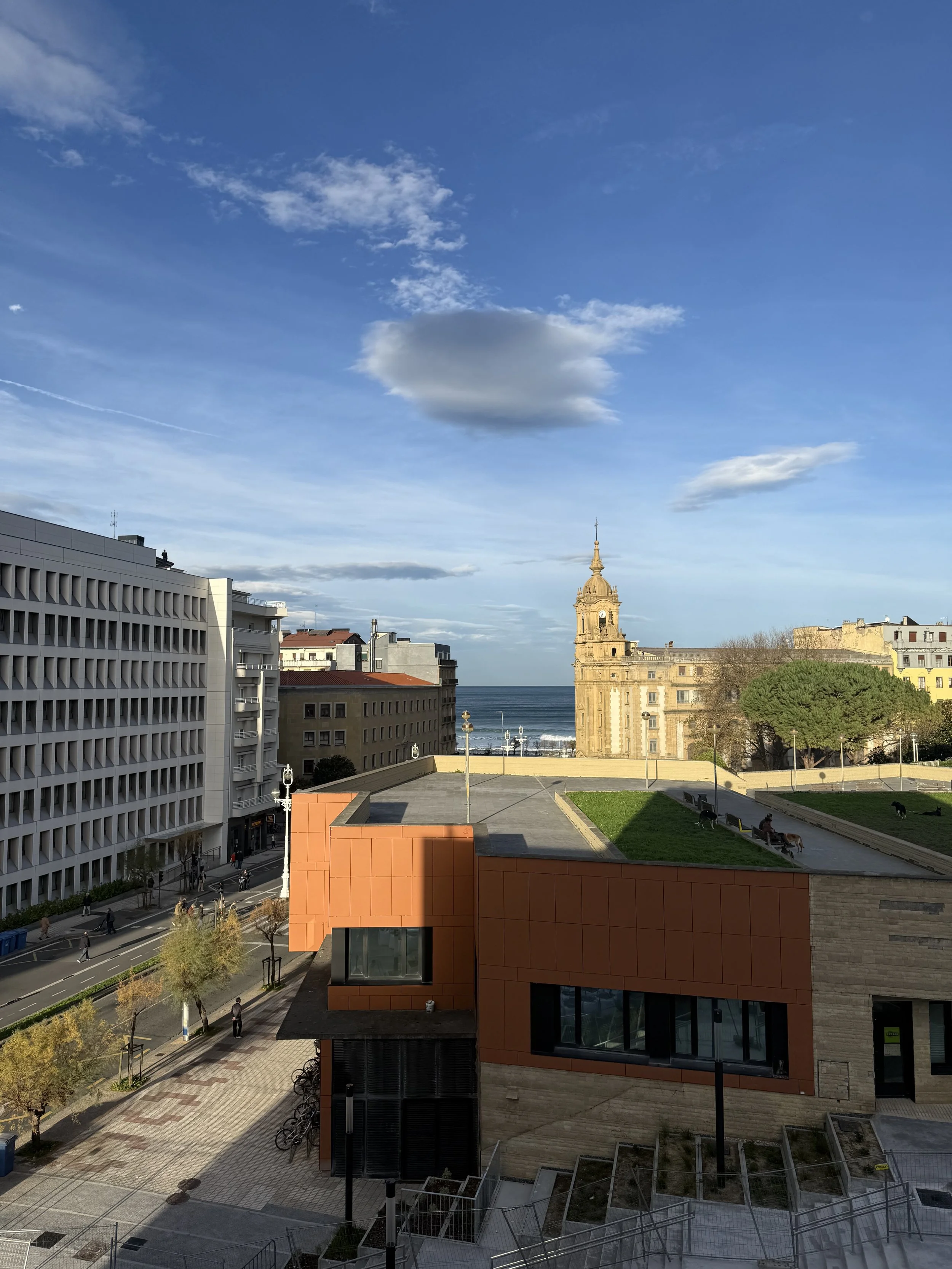
The newest landmark in San Sebastián isn't just a building. It's a statement about the future of food, designed by one of the world's most visionary architects and positioned along one of Europe's most historic pilgrimage routes. GOe, or Gastronomy Open Ecosystem, opened its doors in October 2025 as the Basque Culinary Center's ambitious expansion into the Gros neighborhood, and it represents a radical reimagining of what a culinary research center can be.
Designed by Bjarke Ingels Group (BIG), the Danish architecture firm known for transforming urban landscapes, GOe occupies 9,090 square meters at the base of Mount Ulia. The building's design philosophy centers on dissolving boundaries: between inside and outside, between institution and community, between culinary tradition and innovation. From the street, the structure appears to rise organically from the sloping terrain, its vertical copper-toned fins echoing the geological striations of the nearby Basque coastline.
A Building That Invites You to Walk Over It
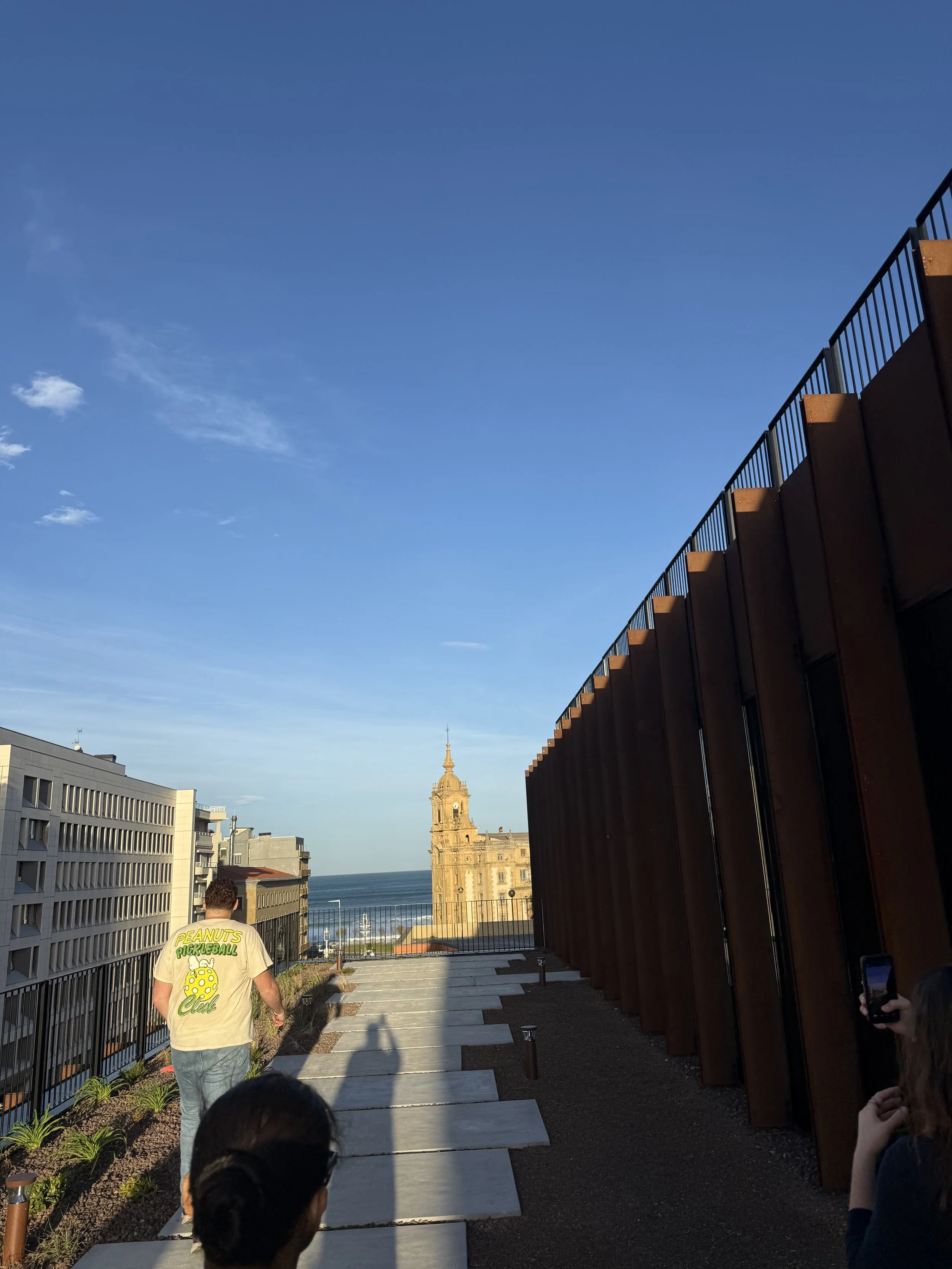
What makes GOe architecturally extraordinary is its accessible green roof, which functions as a continuation of the mountain landscape. The roof cascades in terraces toward the Cantabrian Sea, creating outdoor gathering spaces that serve as both urban park and observation deck. This design choice reflects a core principle of the project: gastronomy should not happen behind closed doors but in dialogue with the public.
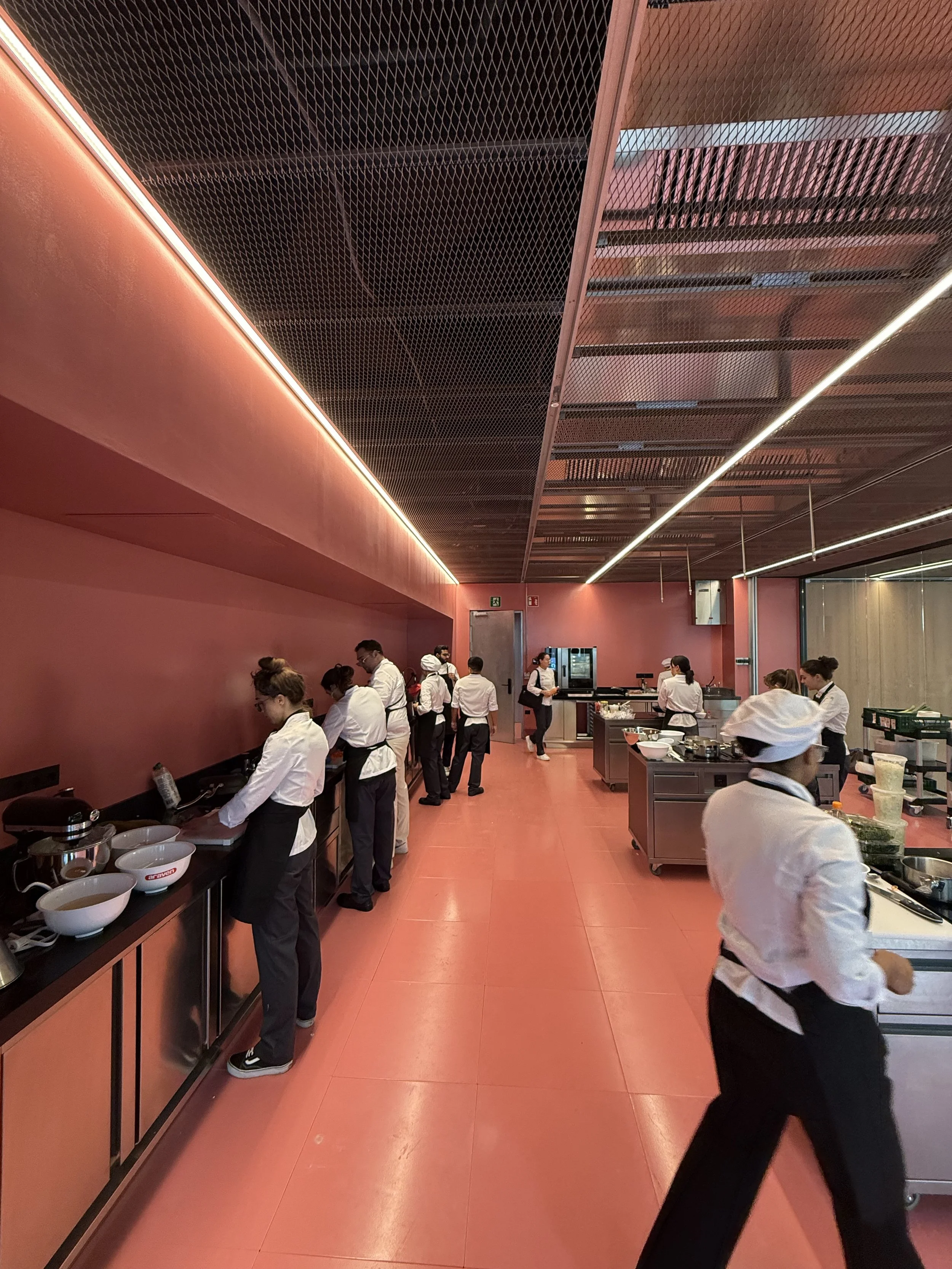
The building sits along the Camino de Santiago, the historic pilgrimage route that has brought travelers to this region for centuries. A sheltered plaza at ground level welcomes pilgrims, locals, and food enthusiasts, offering them a glimpse into the culinary innovation happening inside through expansive glass windows that reveal kitchens and laboratories in action. This transparency is intentional. GOe wants you to see food research as it unfolds, to understand that the future of what we eat is being shaped by chefs, scientists, and students working in real time.
Step inside and you encounter what architect Bjarke Ingels calls "carefully curated coincidences". The building's central feature is a monumental staircase with stepped seating that rises through multiple levels, functioning simultaneously as circulation and amphitheater. Students heading to fermentation labs pass researchers demonstrating techniques. Visitors glimpse experimental kitchens below. The staircase transforms everyday movement into opportunity for exchange, creating the chance encounters that spark innovation.
The design references Eduardo Chillida's sculptures in San Sebastián, incorporating the region's characteristic materials: Corten steel, glass, wood, and the distinctive coral-red surfaces that mark the industrial kitchens visible from outside. These vivid kitchens, equipped with professional-grade tools, signal that this is a place of serious culinary work, not just theory.
GOe embodies what BIG calls "hedonistic sustainability," the idea that environmental responsibility should enhance quality of life rather than require sacrifice. The green roof reduces energy demand and supports native vegetation from Mount Ulia, creating biodiversity corridors and reducing urban heat. The building's ventilated skin and strategic use of natural light minimize energy consumption while maintaining optimal conditions for food research.
The site's natural 10-meter slope, rather than being flattened, was incorporated into the design, reducing excavation and creating the building's distinctive terraced form. Rainwater collection systems, careful material selection, and the integration of the building into pedestrian routes rather than car-dependent access all reflect a commitment to sustainability that goes beyond token gestures.
Over 1,000 people toured GOe during its public open house, walking through spaces typically hidden in academic institutions. The building includes a top-floor restaurant open to the community, a ground-floor contemporary cafeteria, and outdoor terraces where the public can observe culinary activities while enjoying views of the sea. This openness is revolutionary for a research institution.
The choice to locate GOe in the urban Gros neighborhood, rather than on the outskirts where the main Basque Culinary Center campus sits, was deliberate. Joxe Mari Aizega, director of the Basque Culinary Center, emphasized that being "in the city" matters, that innovation thrives when it's accessible to the people it serves. The building responds to this by providing new public spaces, plazas, and gathering areas that enrich the surrounding urban environment.
Bjarke Ingels envisions GOe becoming "a destination in its own right for culinary pilgrims from around the world". That vision is already taking shape. The building hosts master's programs in food fermentation, food design, and gastronomic sciences. It houses the GOe Tech Center, where researchers develop alternative proteins, functional fermented beverages, and sustainable food solutions. It provides coworking spaces for food startups and facilities for companies to prototype new products.
But perhaps most significantly, it offers a new model for how architecture can serve gastronomy. Rather than creating a fortress of expertise, it creates a permeable membrane where knowledge flows between researchers and community, where innovation is visible and accessible, where food becomes a lens for reimagining how we build, gather, and nourish ourselves.
Walking along the Camino de Santiago past GOe, pilgrims now encounter not just a building but an invitation: to pause, to look inside, to consider that the future of food is being shaped right here, and that you're welcome to be part of it.
