Innovation Culture: Inside GOe's Foodtech Ecosystem and What It Means for Entrepreneurs

San Sebastián already held global culinary prestige before GOe opened. With more Michelin stars per capita than nearly anywhere on Earth and a tradition of gastronomic societies stretching back generations, the city had established itself as a pilgrimage destination for serious food lovers. But GOe, the Gastronomy Open Ecosystem that opened in October 2025, represents a different kind of ambition: building infrastructure not just for dining excellence but for systematic food innovation and entrepreneurship.
For anyone interested in the intersection of food, technology, and business, understanding GOe's ecosystem offers insights into where food innovation is heading and how institutions can support the often-precarious work of building food startups.
The Entrepreneurship Engine

At the heart of GOe's startup ecosystem is Culinary Action!, the entrepreneurship arm of the Basque Culinary Center that has accelerated nearly 100 food startups since its launch. Culinary Action! operates on a philosophy that gastronomy encompasses a wide value chain: from agricultural production through processing, distribution, preparation, service, and even waste management. And that innovation opportunities exist at every link.
The organization runs accelerator programs, provides incubation space, offers mentorship from industry experts, facilitates matchmaking with investors, and creates showcases like the Future Gastronomy Startup Competition where entrepreneurs can pitch to potential funders. This comprehensive support model recognizes that most food startups fail not from lack of good ideas but from insufficient business development resources, network access, and patient capital.
The Global Foodtech Accelerator, run in partnership with Impact Hub Madrid, Amsterdam, and Berlin, exemplifies this approach. The program seeks European startups working on what Basque Culinary Center calls "Gastronomy 360°" projects that address health, digitalization, sustainability, or sensoriality through food innovation. Selected startups receive bootcamp intensives in major cities, access to the GOe Community digital platform, and a one-month residency at LABe Digital Gastronomy Lab in San Sebastián.
LABe: Living Laboratory for Food Innovation
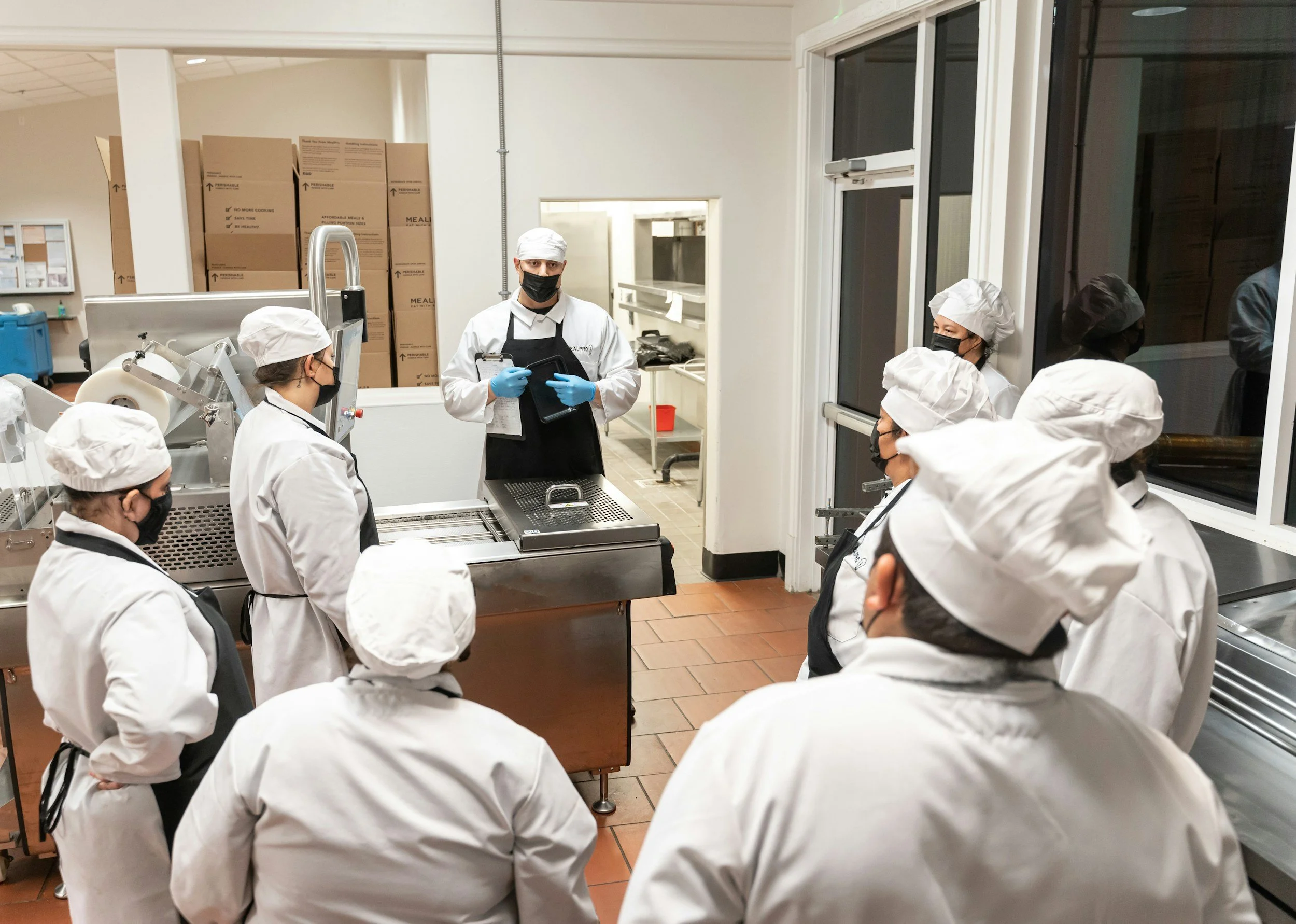
LABe Digital Gastronomy Lab, housed within GOe's 1,400 square meters of innovation space, operates as what's called a "living lab" a real-world environment where companies, startups, chefs, and consumers can co-create, prototype, and test new technologies, products, and services. This model differs from traditional R&D facilities by prioritizing actual user feedback from the earliest stages of development.
The infrastructure includes coworking space where startups and established companies work side by side, prototyping kitchens equipped for food product development, meeting rooms, a mini amphitheater for events, and perhaps most importantly, a real restaurant open to the public where innovations can be tested with actual diners. This restaurant context is crucial. A food technology that works in a laboratory might fail in the chaos of a professional kitchen during service. LABe allows those failures to happen early, when pivoting is still possible.
The experimental 360-degree immersive room pushes the boundaries of dining experiences, exploring how technology can enhance or transform how people engage with food. Virtual reality, augmented reality, projection mapping, and sensory manipulation technologies that might seem like novelties can be tested for their actual impact on enjoyment and willingness to pay.
For startups, the value proposition is access to infrastructure that would be prohibitively expensive to build independently. For established companies, it's a space to explore new directions without committing entire R&D budgets. For consumers who dine at the LABe restaurant, it's exposure to food innovation as it's emerging, not years after products hit mainstream markets.
GOe's coworking spaces function as what innovation theorists call "collision spaces"—environments designed to increase unexpected encounters between people working on different problems. A startup developing alternative protein might sit next to a restaurant group exploring supply chain traceability next to a researcher studying fermentation microbiomes. The proximity creates opportunities for chance conversations that spark collaborations.
This model has proven effective in technology hubs like Cambridge Innovation Center (CIC), which has partnered with GOe to extend the food innovation ecosystem globally. CIC's expertise in creating high-impact industry clusters, developing programs that connect startups with corporate partners and investors, and fostering communities of practice transfers to GOe's context.
The GOe Community digital platform extends this collision space online, creating "the first digital community within the Gastronomy 360º sector". Startups, researchers, industry professionals, and investors can connect, share knowledge, post opportunities, and collaborate across geographic boundaries. This combination of physical and digital community infrastructure addresses the isolation that often hampers food entrepreneurs, particularly those working outside major metropolitan centers.
One of the most significant barriers food startups face is access to appropriate funding. Many food businesses require patient capital: investors willing to wait years for returns while products are developed, tested, regulated, and scaled. GOe addresses this through several mechanisms.
The Future Gastronomy Startup Competition provides visibility to early-stage ventures, connecting them with investors specifically interested in food innovation. The competition culminates at events like HIP Horeca Professional Expo in Madrid, where judges include investors, corporate innovation leaders, and successful food entrepreneurs.
GOe On the Road events, held in cities like Cambridge, London, and beyond, bring the pitch competition to different markets, expanding the pool of potential investors and partners. The winning startup from the London event, for example, receives 20 hours of research and innovation project time at GOe Tech Center plus a three-month residency at the coworking space. This combination of expertise access and workspace dramatically reduces early-stage costs.
The partnership with CIC creates pathways to investors in CIC's global network, which includes venture capital firms, corporate venture arms, and angel investors active in foodtech. This matters because food innovation often requires interdisciplinary investment thesis—investors who understand not just food or just technology but their convergence.
GOe Tech Center: Research as Competitive Advantage

For startups working on novel ingredients, alternative proteins, fermentation technologies, or functional foods, access to GOe Tech Center's research capabilities provides a competitive advantage difficult to replicate. The center offers services including sensory analysis, consumer testing, product development support, nutritional analysis, and regulatory guidance.
A startup developing a plant-based cheese alternative, for example, might use the sensory science team to understand why early prototypes lack appeal, then work with food scientists to reformulate, then test new versions with consumers in both controlled settings and the LABe restaurant. This iteration cycle, which could take years and hundreds of thousands of euros if purchased from commercial labs, becomes accessible to resident startups.
The Tech Center's focus on "clean label" ingredients, alternative proteins, fermentation, and functional foods aligns with major foodtech investment trends. Startups working in these areas benefit from being embedded in an ecosystem where the latest research is happening, where experts are accessible for informal consultation, and where they can recruit talent from master's programs focused on these exact topics.
The German startup Koralo, winner of the first Global Foodtech Accelerator in 2024, illustrates the ecosystem's value. Koralo's solution addressed challenges in the food value chain, and their accelerator experience included bootcamps in Berlin, workshops with industry mentors, pitch training, investor introductions, and the one-month LABe residency. This compressed learning and networking, which might take years to accumulate through individual effort, into an intensive supported program.
The accelerator model reduces not just financial barriers but knowledge barriers. First-time food entrepreneurs often don't know what they don't know: which regulations will affect their product, how to position for retail versus food service, what margins are realistic, how to protect intellectual property. Accelerators transfer this operational knowledge through mentorship and peer learning.
GOe's ambition extends beyond San Sebastián through the GOe Global Network, which launched its first international hub, GIC Tokyo, in partnership with Tokyo Tatemono in 2024. This network model allows food innovators from different regions to access GOe's methodologies, connections, and programs without relocating to Spain.
GIC Tokyo offers educational programs in Japanese and English, promotes local culinary culture while connecting to global food heritage, and creates an ecosystem uniting chefs, entrepreneurs, scientists, and innovators from around the world. The model recognizes that food innovation must be culturally adapted—a fermentation technique or alternative protein that works in Japan's food context may differ from what succeeds in Europe—but that the underlying innovation methodologies transfer.
This global expansion creates partnership opportunities for startups. A European company working on fermentation technology might find Japanese partners through GIC Tokyo. A Japanese company developing functional beverages might access European markets through connections made in San Sebastián. The network functions as infrastructure for international collaboration that would otherwise require extensive business development resources.
GOe facilitates what innovation ecosystems call "matchmaking" connecting startups with established companies that might become customers, partners, or acquirers. Many food corporations struggle with internal innovation, burdened by legacy systems and risk-averse cultures. Partnering with or acquiring startups allows them to access innovation developed externally.
The LABe living lab creates structured opportunities for these connections. A large food manufacturer might sponsor a pilot project, providing funding and expertise while the startup provides agility and novel technology. These pilots, tested in LABe's restaurant or with its network of testing restaurants, provide proof of concept that can lead to larger partnerships or acquisitions.
The Tech Center also works directly with companies on innovation projects, creating additional pathways for startups to connect with industry. A startup specializing in food waste valorization might be introduced to a processor generating significant by-product streams. A company developing restaurant management software might pilot with hospitality groups already working with Basque Culinary Center.
It would be misleading to suggest that GOe guarantees startup success. The food industry remains challenging: thin margins, complex regulations, entrenched distribution channels, and conservative consumer behavior. Most food startups still fail, and acceleration programs can only mitigate, not eliminate, those risks.
What GOe provides is increased probability of success through reduced costs (subsidized space and services), increased knowledge (mentorship and peer learning), expanded networks (investor and industry connections), and accelerated iteration (testing infrastructure). These advantages matter most for first-time entrepreneurs lacking the experience and connections that serial entrepreneurs accumulate.
The ecosystem also works best for certain types of food innovation: technology-enabled products or services, novel ingredients, process innovations, sustainability solutions. Traditional restaurant concepts or straightforward food products may benefit less from GOe's particular resources than from other forms of support.
GOe doesn't operate in isolation. San Sebastián's culinary reputation, the Basque region's food culture, and the support of regional government (the Basque Government, Provincial Council of Gipuzkoa, and City Council of Donostia-San Sebastián all backed GOe's development) create enabling conditions. The ecosystem includes not just GOe but the main Basque Culinary Center campus, a network of innovative restaurants, food producers, hospitality groups, and other institutions.
Understanding this broader context matters for entrepreneurs considering whether to engage with GOe. The value isn't just the facilities or programs but the entire environment: a city where gastronomy is taken seriously, where experimental restaurants can find audiences, where producers are accustomed to working with chefs on novel products, where food innovation is culturally valued.
GOe represents a model that other regions might study: treating food innovation infrastructure as public investment rather than leaving it entirely to private markets. The 26-million-euro budget came largely from public sources, reflecting a belief that supporting gastronomy generates broader economic and social returns.
The measured economic impact: €228 million generated by Basque Culinary Center between 2012 and 2022, suggests this investment model works. But the returns extend beyond direct spending to include knowledge spillovers, network effects, reputation building, and the harder-to-quantify benefits of positioning a region as a center of excellence in a growing field.
For entrepreneurs, the existence of institutions like GOe matters not just if you directly participate but because they signal that serious resources are backing food innovation, that the field is maturing, and that pathways exist for turning culinary expertise into viable businesses. The future of food will be shaped partly by individual entrepreneurs but also by the infrastructure that supports or hinders their efforts. GOe represents a bet that building that infrastructure accelerates progress toward more delicious, sustainable, and equitable food systems.
