A collection of guides, reflections, and resources on Gastronomy and Life in Spain.
The Microbiology of Safe Fermentation: How to Harness Good Microbes and Avoid Hidden Risks
Fermentation is often seen as an ancient, “natural” way to preserve food, but that does not mean every ferment is automatically safe. Safe fermentation is applied microbiology: beneficial bacteria and yeasts must be given the right conditions to dominate, while pathogens are pushed out of their comfort zone. This article explains why properly made fermented foods are usually safer than the raw ingredients, and how regulatory concepts like GRAS and QPS define which microbes are considered safe for use in food. It compares wild ferments (like sourdough, kombucha, kefir, and kimchi) with defined starter cultures so you understand the trade-offs between flavor, tradition, and safety. You will learn the three big control levers, pH, salt and water activity, and temperature, and how they work together to keep Salmonella, Listeria, Clostridium botulinum, and other hazards in check. Finally, you get a practical checklist for safe home fermentation and clear advice for people who need to be extra cautious, including pregnant, immunocompromised, or histamine-sensitive readers.
Kombucha Under the Microscope: The Secret Ecosystem In Your Jar
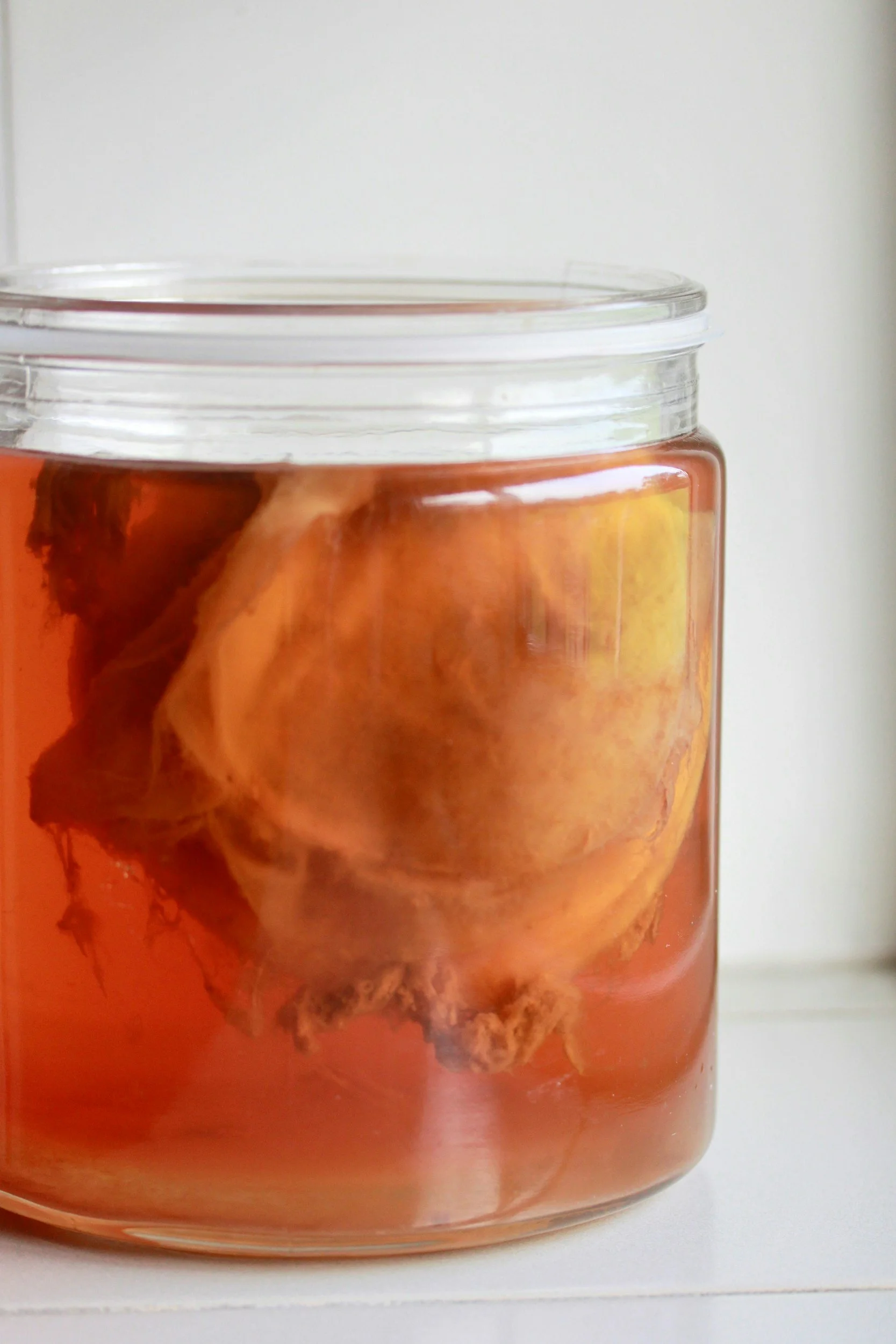
That rubbery disc floating in your kombucha jar is not a mistake or a film to be removed. It is a highly organized biological community thousands of years old. It is a microbial city where bacteria and yeast coexist, cooperate, and create one of the most complex fermented beverages known to humanity.
This community is called a SCOBY, which stands for Symbiotic Culture of Bacteria and Yeast. Despite its intimidating acronym, a SCOBY is simply a biofilm where microorganisms have organized themselves into a structured matrix. Understanding what lives in your kombucha jar requires understanding the remarkable organisms that call it home.
The Magic of Miso: Ancient Fermentation Meets Modern Science
In Japanese cuisine, miso is often described as liquid gold. A spoonful contains the concentrated complexity of flavors, aromas, and health benefits that result from years of microbial fermentation. Yet what makes miso truly remarkable is not poetry but biochemistry.
Miso represents one of humanity's oldest and most sophisticated fermentation processes. It demonstrates how microorganisms, salt, time, and human knowledge combine to transform simple soybeans into a food that improves nutrition, creates addictive umami flavors, and supports health.